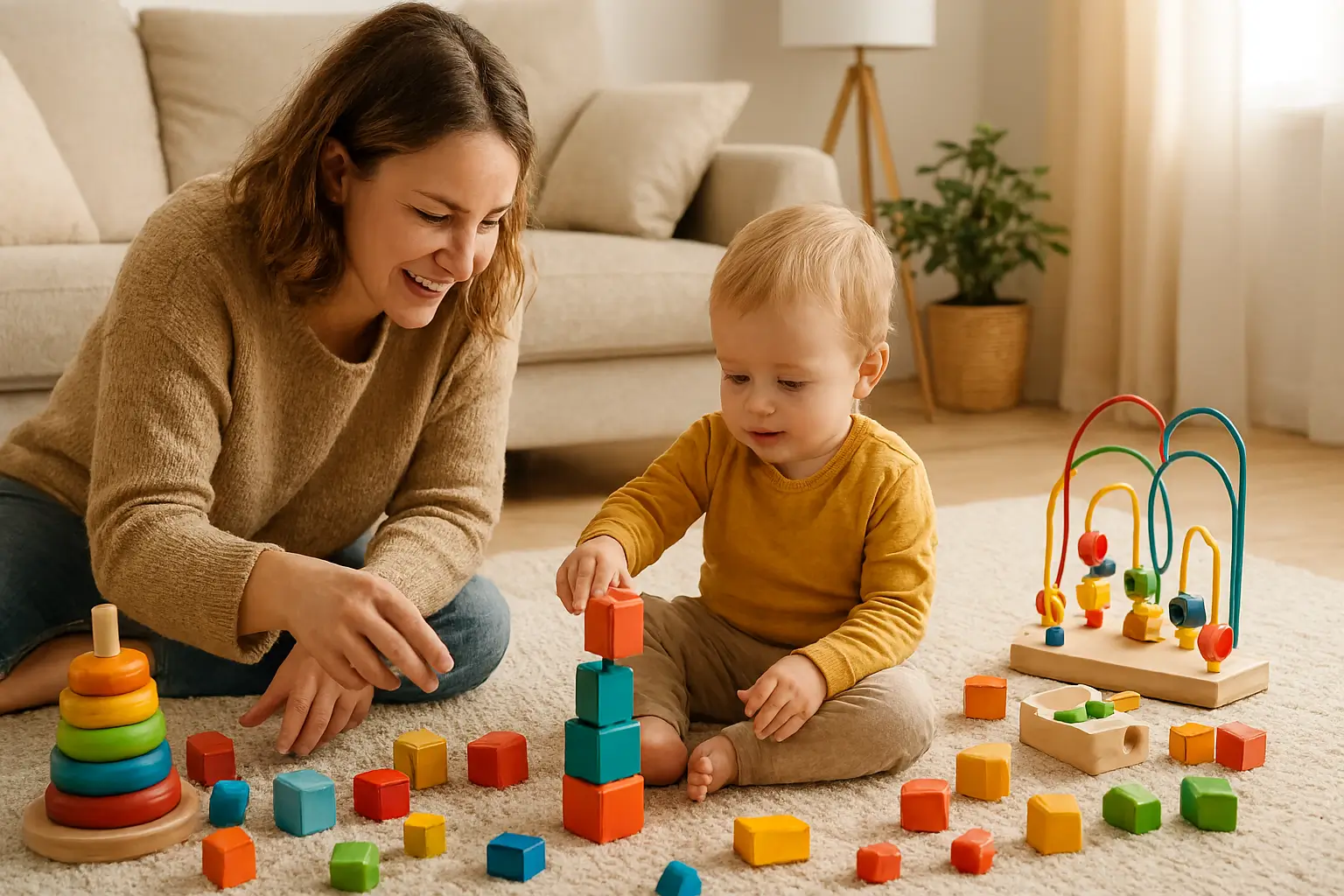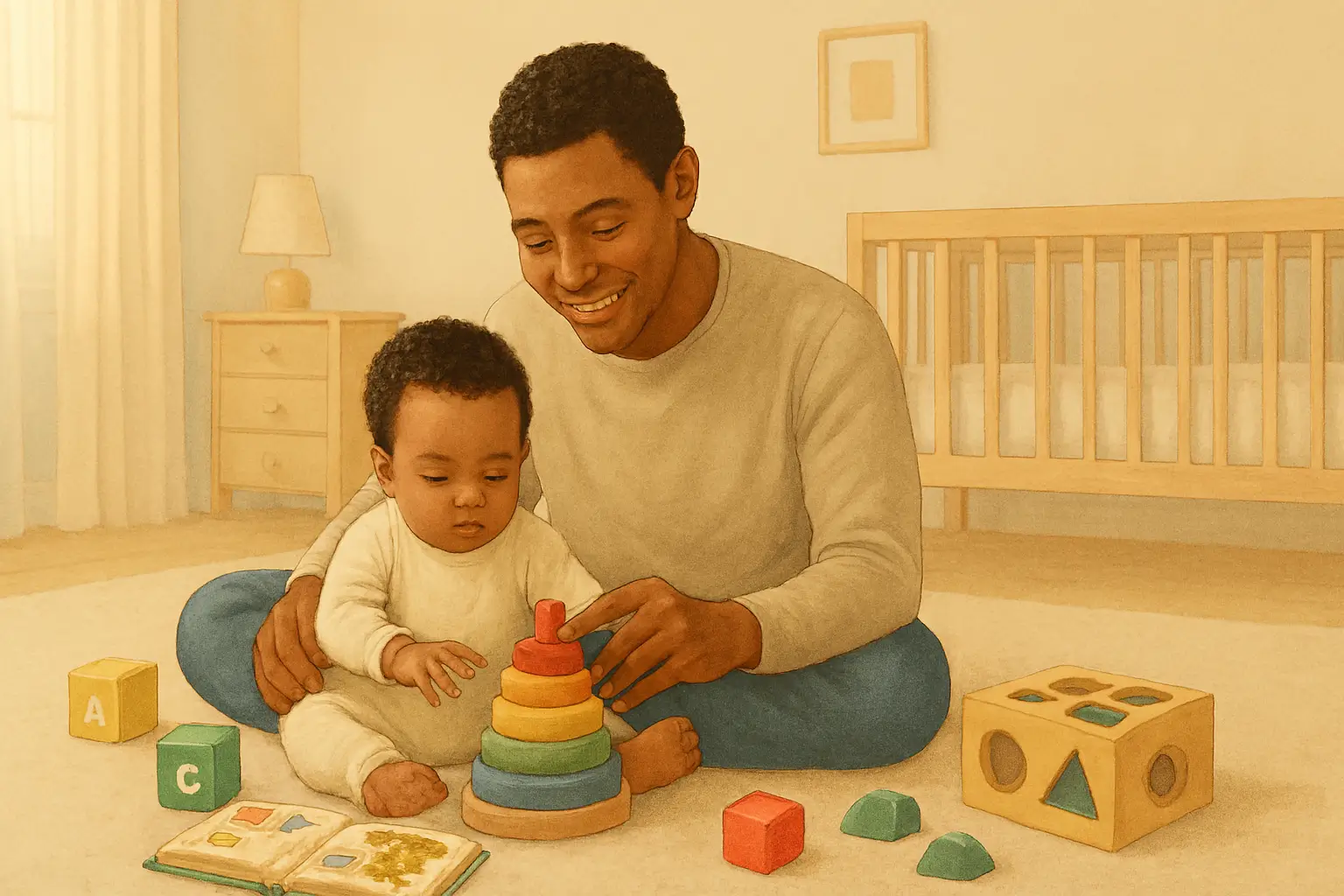
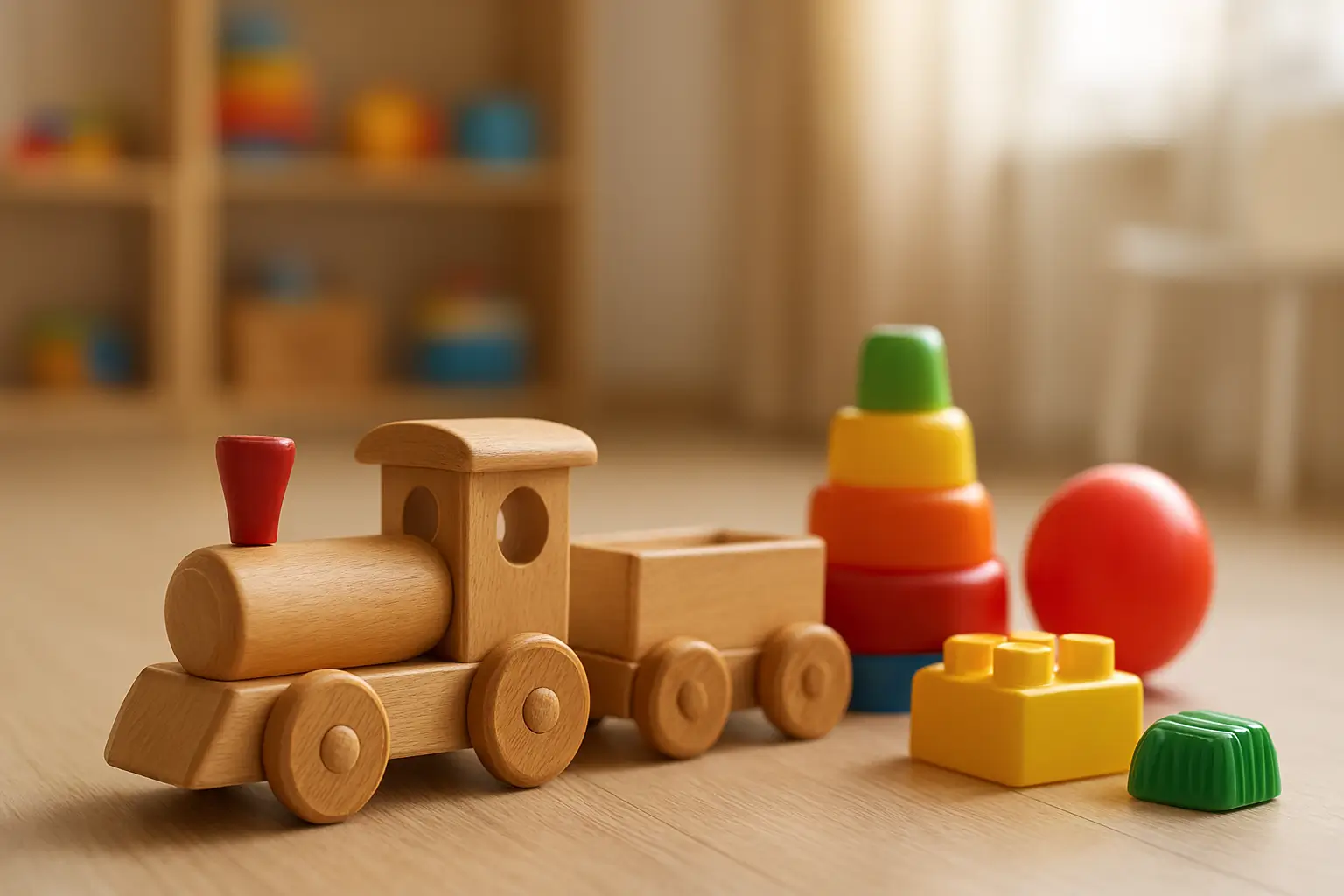
When Mira first became a mother, she bought the same toys most new parents do — bright, musical, plastic toys with flashing lights and irresistible buttons. Her son adored them. They entertained him, distracted him during diaper changes, and filled the room with sound. But by his second birthday, most of those toys were cracked, silent, or abandoned.
Then one day, a relative gifted him a simple wooden train set — no batteries, no lights, just smooth curves, weight, and the unmistakable smell of wood. Mira didn’t expect much from it. But her son surprised her. What began as rolling the train back and forth turned into building tracks, storytelling, and imaginative play that lasted far longer than any plastic toy ever had. Years later, that same wooden train is still part of the family’s toy rotation.
This story reflects a dilemma almost every parent faces:
– Should you choose wooden toys or plastic toys?
– Are wooden toys really safer?
– Are plastic toys truly bad for the environment?
– Which toys support better learning and development?
This in-depth guide breaks it all down — using research, practical examples, buying tips, environmental insights, and real user experiences. Whether you’re a parent, teacher, or conscious shopper, this article will help you make confident and informed decisions.
Table of Contents
Why This Topic Matters Today
We live in a world flooded with toys. The average child owns more than 200 toys — yet plays with only 12 daily. Parents are overwhelmed by options, worried about safety, and increasingly conscious of sustainability. At the same time, children’s developmental needs remain as essential as ever: imagination, sensory exploration, problem-solving, and free, independent play.
That’s why comparing wooden toys vs plastic toys is so important. It’s not just a matter of materials — it’s a decision that affects learning, creativity, attention span, home environment, and even long-term sustainability.
Quick Comparison: Wooden vs Plastic (At a Glance)
| Criteria | Wooden Toys | Plastic Toys |
|---|---|---|
| Durability | Extremely durable; can last generations | Varies greatly; many break quickly |
| Developmental Value | High — open-ended, imaginative play | High for cause-effect, bright colors, sound |
| Sensory Experience | Warm, textured, tactile | Smooth, lightweight, uniform |
| Safety | Typically safer if non-toxic finishes are used | Must ensure BPA-free, phthalate-free |
| Cleaning | Wipe only; not ideal for soaking | Easy to wash, sanitize, or put in dishwasher |
| Sustainability | Renewable, biodegradable (if responsibly sourced) | Petroleum-based; recycling is difficult |
| Cost | Higher upfront | Usually cheaper |
| Variety & Features | Classic, minimalist | Huge variety; electronics, lights, sound |
Now let’s break down each of these in detail, with examples, research-backed explanation, and practical recommendations.
Developmental Benefits: How Each Toy Type Shapes a Child’s Mind
Children learn through play — and the type of toys they use changes how they learn.
Wooden Toys Encourage Open-Ended, Creative Play
Wooden toys tend to be simple: blocks, puzzles, stacking rings, pull toys, train sets. But don’t mistake simplicity for lack of value. In fact, the lack of flashing lights or pre-programmed functions encourages kids to think, imagine, and invent.
Benefits of wooden toys:
- Spark imagination instead of overstimulating the senses
- Strengthen fine motor skills
- Build problem-solving abilities
- Encourage longer attention spans
- Develop spatial awareness
A wooden block can become a car, a castle tower, or a phone — depending on the child’s imagination. This freedom is powerful for early brain development.
Plastic Toys Promote Cause-and-Effect Learning
Plastic toys shine in areas where wooden toys can’t compete:
lights, sound, movement, electronic interactions, detail, and color.
Benefits of plastic toys:
- Excellent for early STEM learning
- Support cause-effect understanding (“press button, hear sound”)
- Provide multisensory stimulation
- Often lighter and easier to grasp for babies
- Often waterproof, ideal for bath play
A plastic shape sorter may talk, sing, or light up. A plastic train might move automatically. These features are engaging and educational — especially for infants and toddlers.
Bottom Line:
- Wooden toys win for creativity, imagination, focus, and open-ended play.
- Plastic toys win for stimulation, electronic learning, and cause-effect development.
- A balanced mix works best for most families.
Safety Considerations: Toxicity, Choking Hazards & Certifications
Many parents switch to wooden toys because they believe plastic toys are unsafe — but the truth is more nuanced.
Are Wooden Toys Automatically Safer?
Not always. Wooden toys are generally safer if:
- The wood is solid (not made of toxic composites)
- Finishes are non-toxic and water-based
- Parts are large enough to avoid choking hazards
Look for:
- CPSIA or ASTM F963 (US)
- EN71 (EU)
- FSC-certified wood
- Lead-free, water-based paints
Cheap, low-quality wooden toys can still contain toxins or poor-quality glues.
Are Plastic Toys Dangerous?
Not all plastic toys are unsafe, but you must check for:
- BPA
- Phthalates
- PVC toxins
- Lead (in rare cases)
- Small detachable parts
High-quality brands use BPA-free and phthalate-free plastics. The biggest safety issues often involve:
- Choking hazards
- Broken plastic pieces with sharp edges
- Cheap brands with unknown material sources
Safety Summary
| Safety Factor | Wooden Toys | Plastic Toys |
|---|---|---|
| Toxic chemicals risk | Low (with non-toxic finishes) | Variable — high in cheap toys |
| Breakability | Low | Medium–high depending on quality |
| Choking hazards | Possible with small pieces | Common with detachable parts |
| Certifications required | Yes | Yes |
Cleaning, Sanitizing, and Maintenance
Every parent knows this: toys end up in mouths, on floors, in the bathtub, and everywhere in between. So toys must be cleaned with caution.
Cleaning Wooden Toys
Wood absorbs water, so it should never be soaked or put in the dishwasher.
Best practices:
- Wipe with damp cloth + mild soap
- Use diluted vinegar (1:10 ratio) for deeper cleaning
- Dry immediately
- Sand and refinish if needed
Wooden toys are hygienic because bacteria survive less on porous, dry surfaces.
Cleaning Plastic Toys
Plastic toys are easier to sanitize:
- Most can be washed with warm soapy water
- Many are dishwasher safe (top rack)
- Bleach solutions can be used (as per health guidelines)
- Ideal for bath toys or infant teethers
Electronic plastic toys require surface cleaning only.
Durability, Longevity & Play Value
One of the biggest divides between wood and plastic comes down to how long they last.
Wooden Toys Are Built to Last
A good wooden toy can last:
- Through multiple children
- Across generations
- Even in daycares or preschools
Wood is strong, repairable, and ages beautifully.
Plastic Toys Are Hit or Miss
Plastic durability varies:
- High-quality plastic toys (e.g., LEGO) last decades
- Low-quality toys crack, fade, or break easily
- Electronic toys stop working once the circuitry fails
In general:
- Wooden toys = long-term investment
- Plastic toys = more disposable
Environmental Impact: Sustainability Matters
More parents are considering the environmental footprint of their buying choices — and toys are a significant part of that.
Wooden Toys Are More Eco-Friendly
Environmentally, wooden toys win — if the wood is responsibly sourced.
Pros:
- Biodegradable
- Renewable resource
- Lower carbon footprint
- Longer lifespan reduces landfill waste
Cons:
- Unsustainably harvested wood contributes to deforestation
- Some paints and lacquers are not eco-friendly
Look for FSC certifications to ensure responsible sourcing.
Plastic Toys Have a Major Environmental Downside
Plastic toys have issues:
- Made from petroleum
- Rarely recyclable due to mixed materials
- End up in landfills for centuries
- Become microplastics when broken
Even though some brands now use recycled plastics, the majority do not.
Cost: Budget vs Long-Term Value
Most families consider price when buying toys — and plastic is undoubtedly cheaper upfront.
Plastic Toys Are Budget-Friendly
Why?
- Mass production
- Lower material costs
- Lower shipping weight
But they often:
- Break quickly
- Get replaced often
- Lose value fast
Wooden Toys Cost More — But Offer More
Wooden toys may cost more initially, but:
- They last longer
- Can be repaired
- Hold resale value
- Require fewer replacements
In terms of “cost per year”, wooden toys often come out cheaper.
Choosing Based on Age & Play Stage
Here’s a practical guide based on child development:
0–18 Months (Infants)
Go for:
- BPA-free plastic rattles
- Wooden teethers with smooth edges
- Simple grasping toys
18 Months – 3 Years
This is prime time for:
- Wooden puzzles
- Stacking toys
- Blocks
- Push-pull toys
Plus:
- Plastic bath toys
- Plastic sensory toys
3–6 Years
Best for:
- Wooden trains
- Pretend play sets
- Imaginary worlds
- LEGO or construction sets
- Durable plastic vehicles
6+ Years
Great options:
- Wooden strategy games
- STEM plastic kits
- Mixed-material construction sets
How to Build a Balanced Toy Collection
You don’t need to choose between wood and plastic exclusively. The most developmentally rich toy collections mix both.
Suggested Balance
- 70% wooden toys — open-ended play
- 30% plastic toys — sensory stimulation + electronics
Why This Works
- Wooden toys create the foundation of imagination.
- Plastic toys provide variety, excitement, and skill-building.
Together, they support all areas of a child’s development.
Buying Checklist (Parents Should Save This)
Before buying any toy, ask:
Safety
- Is it certified? (CPSIA, EN71, ASTM)
- Is it non-toxic (BPA-free, lead-free, phthalate-free)?
- Are the parts age-appropriate?
Material Quality
- Solid wood?
- High-density plastic?
- Water-based paints?
Durability
- Can it survive drops?
- Is it repairable?
Play Value
- Will it grow with the child?
- Does it encourage creativity or learning?
Sustainability
- FSC-certified wood?
- Recyclable packaging?
Final Verdict: Which Is Better? Wooden Toys or Plastic Toys?
The honest answer: Neither is universally better — both have strengths.
Choose Wooden Toys For:
✔ Open-ended, imaginative play
✔ Long-term durability
✔ Minimalist learning environments
✔ Lower environmental footprint
✔ Toddlers and preschoolers who need hands-on, quiet play
Choose Plastic Toys For:
✔ Babies who need sanitary, lightweight toys
✔ Sensory-rich features like lights, sound, texture
✔ STEM development and cause-effect learning
✔ Bath time, outdoor play, and electronics-friendly design
✔ Budget-friendly variety
Ideal Approach:
Build a mixed toy collection with high-quality wooden staples and carefully chosen, safe plastic toys.
This combination gives your child the best of both worlds — durability, imagination, sensory learning, and modern functionality.
FAQs— Wooden Toys vs Plastic Toys
Are wooden toys safer than plastic?
Generally yes — but only if they use non-toxic paints and high-quality materials. Plastic toys can be just as safe if they are BPA-free, phthalate-free, and certified.
Do wooden toys help with development?
Absolutely. They promote creativity, fine motor skills, focus, and open-ended play.
Which toys last longer — wooden or plastic?
Wooden toys almost always last longer. Good plastic toys like LEGO also have long lifespans.
Which toys are better for the environment?
Wooden toys — especially FSC-certified — are significantly more sustainable than most plastic toys.
Are plastic toys bad for babies?
Not if they’re BPA-free, phthalate-free, and from reputable brands. They’re often easier to clean and sanitize.
Conclusion: A Toybox That Grows With Your Child
The wooden vs plastic debate doesn’t need a single winner. Children benefit from different types of stimulation and different types of play. Instead of choosing one material, choose thoughtful toys that:
- Encourage imagination
- Promote learning
- Last through childhood
- Keep your home environment safe and calm
- Align with your budget and values
A balanced toybox creates balanced development — and happy kids. Let your baby’s toys tell fond stories.
Further Reading—
- Best Educational Toys for BabiesDiscover the best educational toys for babies that boost learning, creativity, and development through fun, sensory-rich, and age-appropriate play experiences.
- Best Bath Toys for ToddlersDiscover the best bath toys for toddlers that make bath time fun, safe, and educational while encouraging creativity, motor skills, and sensory learning.
- How to Choose the Best Baby Rattles for Your BabyDiscover how to choose the best baby rattles that are safe, engaging, and perfect for your baby’s developmental milestones.
- Best Pop Up Toys for Babies: A Fun Way to Boost Early LearningExplore the best pop up toys for babies that make learning fun while boosting motor skills and curiosity.
- Stacking and Sorting Toys for Kids with AutismExplore the best sorting toys for kids with autism that make learning fun, sensory-friendly, and skill-building through joyful play.