
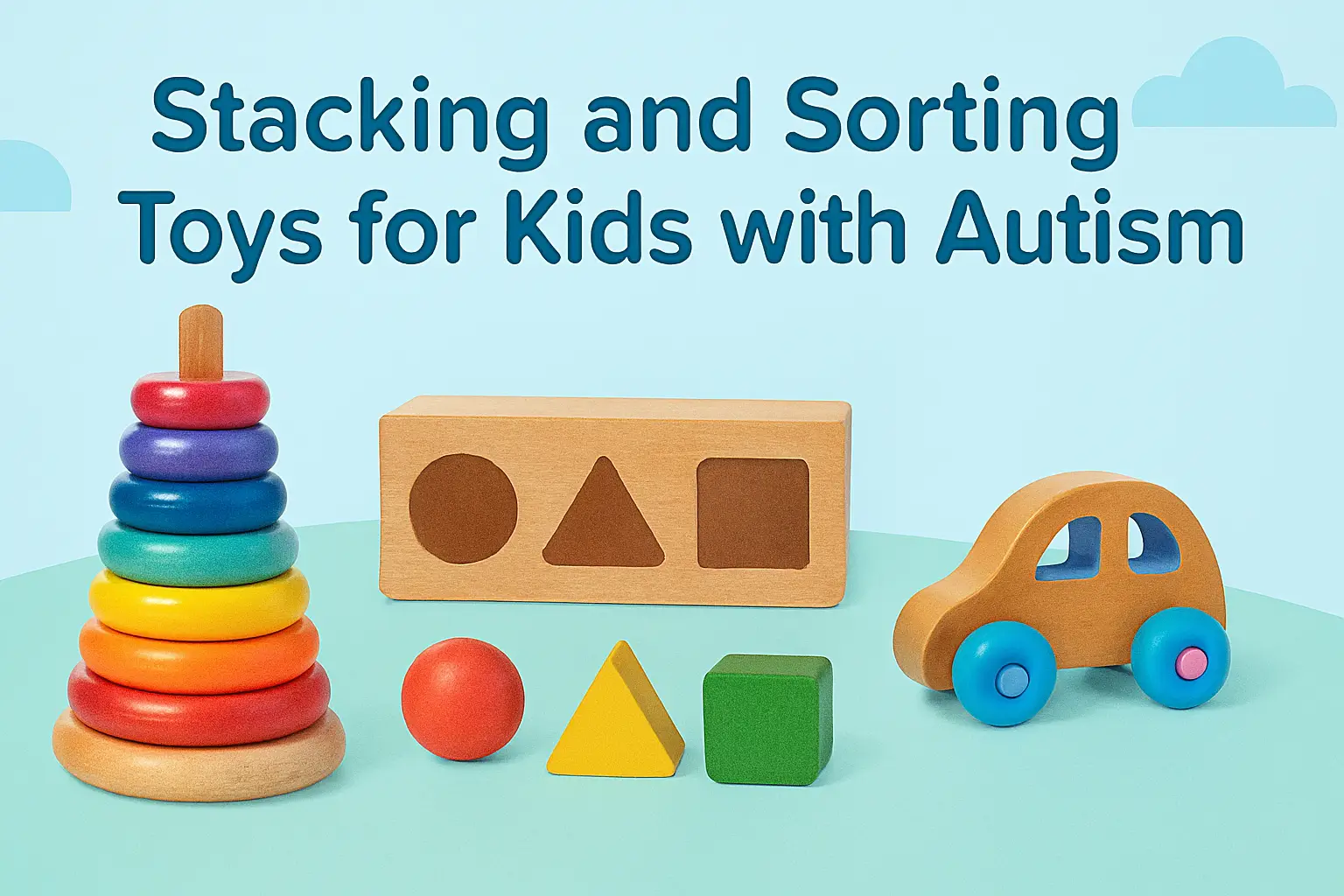
Learning Through Play—A Journey of Joy and Growth
Every child learns differently, but one thing remains universal — play is powerful. For children with autism, playtime isn’t just fun; it’s an essential bridge to develop fine motor skills, focus, and communication. Among the most effective tools for this are stacking and sorting toys for kids, designed to make learning hands-on, sensory-rich, and rewarding.
These toys aren’t just colorful pieces of plastic or wood — they’re stepping stones toward greater confidence and independence. Let’s explore how stacking and sorting toys can help kids with autism learn, grow, and shine at their own pace.
Why Stacking and Sorting Toys Matter for Kids with Autism
1. Enhancing Fine Motor Skills
Stacking rings, shape sorters, and nesting cups require precise hand movements. Each action — picking up, placing, or balancing — strengthens fine motor coordination and hand-eye connection. Over time, children learn to control their grip and improve dexterity, which is essential for tasks like writing, dressing, and self-feeding.
2. Encouraging Problem-Solving and Logical Thinking
Sorting toys for kids come in all shapes and sizes — colors, textures, and categories. As children match objects based on patterns, they start to understand cause and effect. This boosts cognitive development and helps them approach new challenges with curiosity rather than frustration.
3. Building Focus and Patience
Kids with autism often face challenges with attention span. Sorting and stacking toys are naturally structured and repetitive, making them excellent for improving concentration. Completing a tower or sorting all the shapes gives children a sense of achievement, motivating them to stay engaged longer.
4. Supporting Sensory Regulation
Many stacking and sorting toys are designed with tactile, visual, and auditory elements — like textured blocks or toys that make gentle sounds. These sensory inputs can help children self-regulate, calm anxiety, and build comfort with different textures and sensations.
5. Encouraging Social and Emotional Growth
Sorting and stacking activities are perfect for interactive play. Parents, therapists, and siblings can join in, turning the activity into a bonding experience. This social interaction helps children practice communication, turn-taking, and emotional expression — skills that extend beyond the playroom.
Top Types of Sorting Toys for Kids with Autism
Let’s look at a few categories of sorting toys that can make playtime both educational and enjoyable:
1. Color and Shape Sorters
These classics are perfect for beginners. Sorting shapes into matching holes teaches visual discrimination, spatial awareness, and color recognition — all while keeping kids entertained.
🧩 Example: Wooden shape sorter boxes, color sorting bowls, or soft silicone sorting toys.
2. Stacking Rings and Cups
Stacking encourages sequencing and hand-eye coordination. The satisfying action of building and knocking down a tower can also provide sensory feedback that many children with autism find calming.
🌈 Example: Rainbow stacking rings, nesting cups, or textured stacking blocks.
3. Animal and Object Sorting Sets
Sorting animals, fruits, or vehicles helps children make real-world connections. They learn categories — living vs. non-living, big vs. small — improving their language and classification skills.
🦋 Example: Farm animal counters, fruit sorting sets, or themed matching cards.
4. Magnetic and Wooden Sorting Boards
Magnetic sorting toys allow for tactile exploration and creativity. Wooden ones provide a grounding, natural texture that’s great for sensory comfort and focus.
🌿 Example: Montessori-style wooden puzzles, magnetic pattern boards.
5. Interactive Electronic Sorting Toys
For kids who respond well to sound and light feedback, these toys can be a great motivator. Many come with music, lights, or voice prompts that encourage kids to keep learning in a fun and engaging way.
💡 Example: Talking shape sorters or electronic color matchers.
How Parents and Caregivers Can Maximize Playtime Benefits
Here are some simple ways to make stacking and sorting even more effective:
- 🗣 Talk through the play: Describe what your child is doing — “You’re putting the blue circle in the hole!” — to reinforce language learning.
- 💬 Encourage, don’t correct: Focus on small wins rather than perfection. Celebrate effort!
- 🧩 Follow your child’s lead: Let them explore at their pace. If they prefer stacking by size instead of color, that’s perfectly fine — it’s still learning.
- 🎯 Use short sessions: Kids with autism may tire quickly. Short, frequent play sessions work better than long, intense ones.
- 🤝 Play together: Cooperative play strengthens bonds and teaches important social cues.
Therapist-Approved Benefits of Sorting Toys for Kids
Occupational therapists and educators often recommend sorting and stacking toys because they support:
- Hand-eye coordination
- Sensory integration
- Focus and attention span
- Early math concepts (like sorting, counting, and comparing)
- Emotional regulation through repetitive, predictable play
Many therapists use these toys in ABA (Applied Behavior Analysis) or sensory integration therapy, making them both fun and therapeutic.
Best Practices When Choosing Sorting Toys for Kids
When selecting sorting toys for kids with autism, keep these in mind:
- Safety first: Ensure toys are non-toxic, with smooth edges and no choking hazards.
- Sensory-friendly materials: Look for soft, textured, or weighted options that engage the senses.
- Age and skill level: Pick toys that challenge without overwhelming — too easy and it’s boring, too hard and it’s discouraging.
- Durability: Wooden and silicone toys tend to last longer and feel better to touch.
- Therapy-compatible: Choose toys recommended for occupational or developmental therapy.
Final Thoughts: Small Toys, Big Impact
The magic of stacking and sorting toys lies in their simplicity. Each piece stacked or sorted is a small step toward building confidence, focus, and joy in learning. For kids with autism, these toys are more than playthings — they’re tools for growth, connection, and expression.
So next time your child sorts colors or builds a tower, remember — they’re not just playing. They’re learning to make sense of their world, one block at a time.