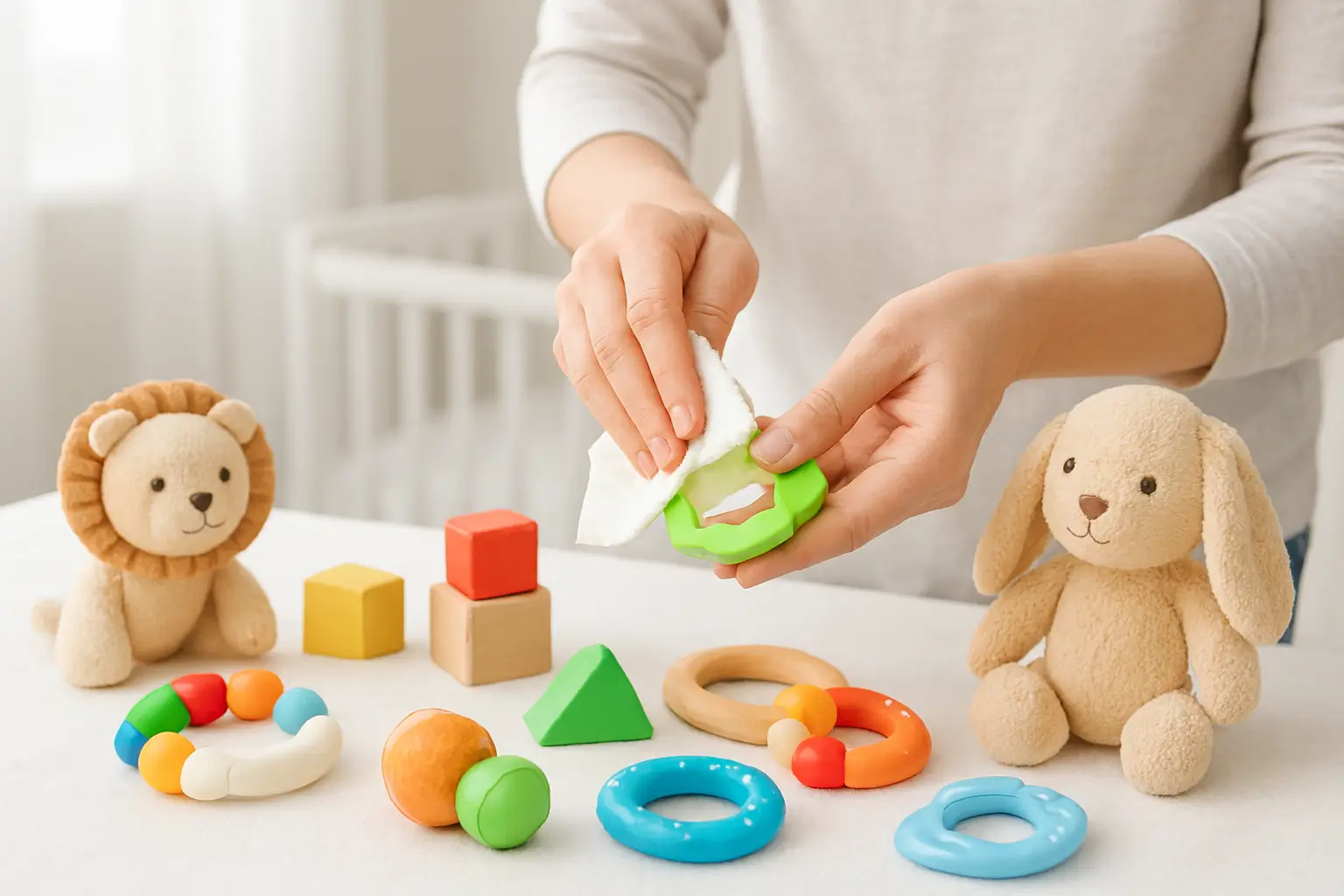
Cleaning baby toys doesn’t need to be a science experiment — but doing it the right way keeps your little one safer, healthier, and happier. Below is a friendly, practical, step-by-step guide on how to clean baby toys safely, organized by toy type, cleaning frequency, and real-world routines you can adopt even when life is chaotic.
Table of Contents
Why Cleaning Baby Toys Matters
Babies explore the world with their mouths. That’s adorable and germy. Toys pick up saliva, food residue, dust, pet dander, and microbes from surfaces and hands.
Germs, Allergens, and Your Baby’s Developing Immune System
A clean toy reduces the risk of passing along common cold bugs, stomach bugs, and allergens. While exposure to everyday microbes helps build immunity, keeping items that go into your baby’s mouth reasonably clean prevents avoidable infections — especially in the first months of life or for babies with health issues.
When to Clean: Daily vs. Deep Cleaning
- Daily quick clean: Wipe down frequently mouthed toys and teethers with a wet cloth or baby wipe—especially if your baby drools a lot.
- Weekly deep clean: For most toys (plastics, teethers, and plush that can be washed), do a more thorough wash once a week.
- Immediately clean: After a sick episode, a diaper blowout, or if a toy falls in a public restroom or on the ground.
General Rules Before You Start
Read Labels and Manufacturer Instructions
Always check the toy’s label. Toys may state “top rack dishwasher safe,” “surface wash only,” or “do not immerse.” Follow these instructions first — manufacturers test materials for safety.
Sort by Material and Replace When Necessary
Group toys into plastic, rubber/silicone, plush, wooden, and electronic. If a toy has sharp edges, deep cracks, or missing pieces, replace it — cleaning won’t fix structural damage.
Cleaning Different Toy Materials (Practical How-tos)
Plastic and Rubber Toys
What works: Warm soapy water, dishwasher (top rack), diluted vinegar solution, or mild bleach solution when necessary.
How to clean:
- Rinse toy to remove surface debris.
- Wash in warm, soapy water with a sponge for 1–2 minutes.
- For extra sanitizing, soak in a solution of 1 tablespoon of household bleach in 1 gallon of water for 2 minutes, then rinse well. (Only use bleach on hard, non-porous items and if the manufacturer allows.)
- Dishwasher-safe toys: place on top rack and run a normal cycle.
Pro tip: Use a toothbrush to clean seams and crevices.
Dishwashing, Soaking, and Vinegar Solutions
If you prefer no-bleach: mix 1 part white vinegar to 4 parts water, soak toys for 10–15 minutes, then rinse. Vinegar is a gentle disinfectant for many plastic toys.
Soft Toys / Plush / Stuffed Animals
What works: Washing machine (if label allows), hand wash, or surface spot clean.
How to clean:
- Machine-washable plush: Seal in a pillowcase or laundry bag and wash on gentle cycle with mild detergent. Air-dry or tumble dry low if label permits.
- Non-machine plush: Hand-wash in warm soapy water and blot with a towel. Spot-clean stubborn stains with a paste of baking soda and water, then brush off.
- Stuffed animals with electronics: Remove electronics if possible and wash the exterior only.
Pro tip: Freeze small plush for a few hours to kill dust mites (this reduces but doesn’t sanitize).
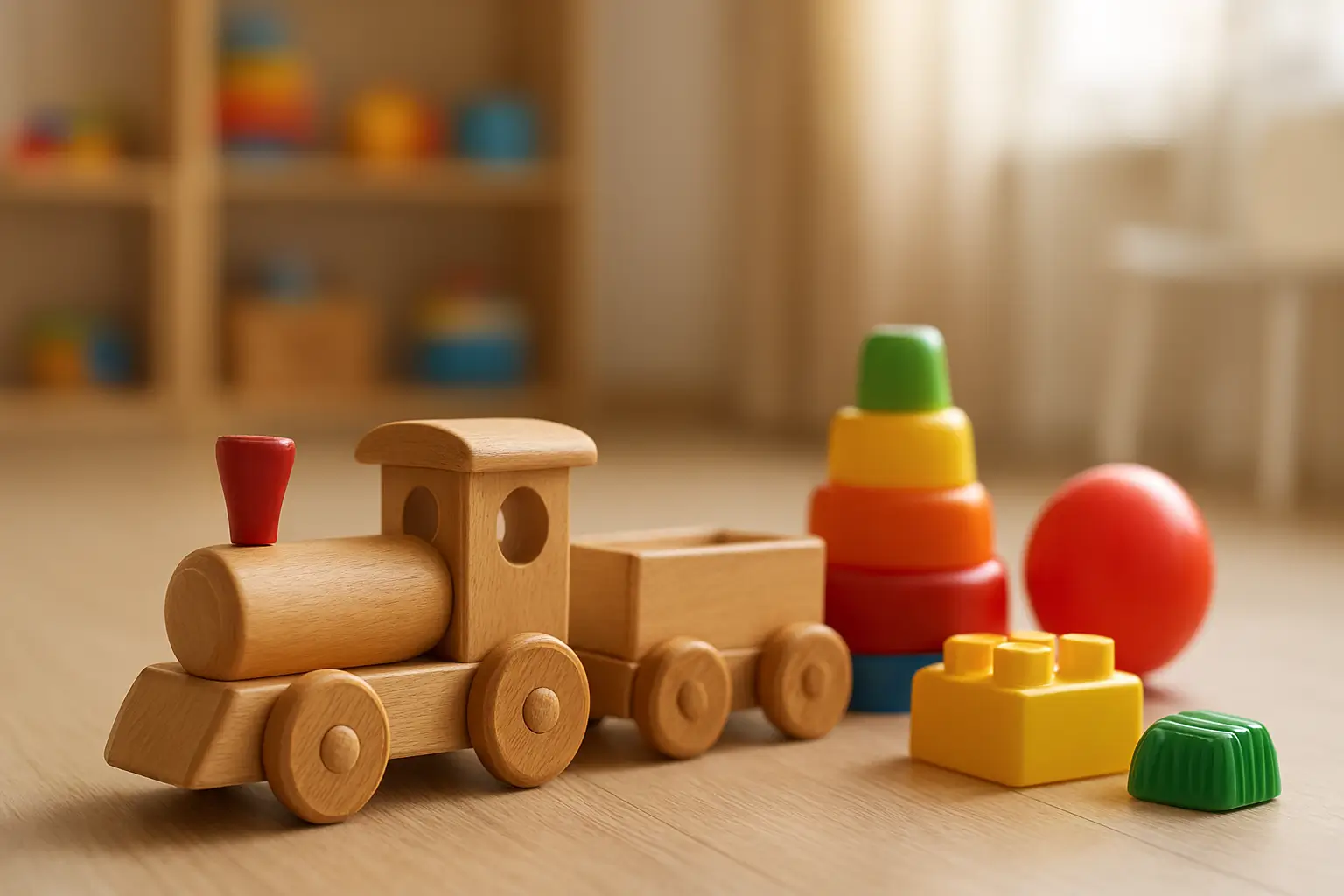
Wooden Toys
Wood hates soaking. Too much water can crack, warp, or strip finishes.
How to clean:
- Wipe with a damp cloth and mild soap.
- Rinse cloth and wipe again to remove soap.
- Dry immediately with a towel and air-dry fully.
- If the wood looks dry, rub with a food-grade oil (like mineral oil or beeswax-based polish) to protect it.
Avoid: Bleach or harsh cleaners and prolonged immersion.
Teethers and Silicone Toys
These go straight into mouths, so keep them extra clean.
How to clean:
- Boil them for 3–5 minutes if the manufacturer allows.
- Or place them on the top rack of the dishwasher.
- For quick sanitizing, soak in white vinegar solution (1:4) for 10 minutes, rinse thoroughly.
Pro tip: Inspect teethers for cracks — replace immediately if damaged.
Electronic and Battery-Operated Toys
Electronics require caution.
How to clean:
- Remove batteries first.
- Wipe exterior with a cloth dampened with soapy water or 70% isopropyl alcohol on a cloth for non-porous surfaces.
- Do NOT submerge — moisture can damage electronics.
- For small crevices, use cotton swabs lightly dampened, then let air dry completely before reinstalling batteries.
Caution: Avoid bleach or soaking on electronics. If water-resistant, follow label specifics.
Safe Cleaning Products and Homemade Alternatives
What to Avoid (Harsh Chemicals, Bleach Misuse)
- Don’t use scented disinfectants on teething toys — residues can irritate.
- Avoid undiluted bleach or concentrated ammonia on baby items.
- Never use products labeled “not for food contact” on teether toys.
Baby-safe Recipes: Vinegar, Baking Soda, Soap
- Everyday cleaner: warm water + a few drops baby-safe dish soap.
- Sanitizer (no-bleach): 1 part white vinegar : 4 parts water, soak 10–15 minutes, rinse.
- Deodorize: sprinkle baking soda on plush, let sit, then vacuum or shake out.
Sterilizing vs. Sanitizing: What’s the Difference?
- Sanitizing lowers germs to a safe level (typical for most home uses).
- Sterilizing removes nearly all microorganisms (used in hospitals and sometimes for newborn items).
When Sterilization Is Recommended
For newborn bottles, pacifiers, or babies with weakened immune systems — sterilization (boiling, steam sterilizers) is a good idea. Most everyday toys only need regular sanitizing.
Practical Ways to Sanitize at Home
- Boiling: Good for hard, heat-safe items for 3–5 minutes.
- Steam sterilizers: Handy for teethers and small plastic items.
- Dishwasher high-heat cycle: Sanitizes many plastics.
- Diluted bleach soak: Use 1 tbsp bleach per gallon of water for 2 minutes, rinse thoroughly.
Drying, Storing, and Rotating Toys
Proper Drying to Prevent Mold
Air-dry toys completely before storage. Stand small items on a towel with airflow. Avoid putting wet plush in bins — that invites mold.
Storage Ideas to Keep Toys Clean Longer
- Use breathable baskets for daily toys.
- Store spare toys in closed bins to reduce dust.
- Rotate toys weekly — fewer toys in rotation means fewer to clean and more engaged play.
Cleaning on the Go: Travel and Outings
When out and about, keep a small kit: baby wipes, a microfiber cloth, a small spray bottle of mild soapy water (or pre-mixed vinegar solution if you prefer), and a zip bag for dirty toys. Disposable silicone travel cases for pacifiers are handy.
When to Throw a Toy Away
Discard toys that:
- Have cracks or missing parts.
- Show mold you can’t remove.
- Fail safety checks or are recalled.
- Are heavily chewed and degraded (choking hazard).
Creating a Simple Weekly Toy-Cleaning Routine
Sample Checklist for Busy Parents
- Monday: Wipe down high-touch plastic toys.
- Wednesday: Machine-wash soft toys in a laundry bag.
- Friday: Deep-clean teethers and teething rings (boil or dishwasher).
- Weekend: Inspect wooden toys and oil if needed.
Make it part of nap-time or bedtime rituals so it becomes habit.
Eco-Friendly and Budget-Friendly Tips
- Reuse old towels for drying instead of paper towels.
- Use white vinegar and baking soda — cheap and effective.
- Rotate toys so you wash fewer items more thoroughly.
- Buy toys with simple designs (fewer nooks and seams) — easier to clean.
Common Myths and Mistakes
- Myth: More sterilization = healthier baby. Reality: Over-sterilizing can limit normal immune development; use common sense.
- Mistake: Using diluted bleach and not rinsing — residues matter. Always rinse thoroughly after sanitizing with bleach.
Safety Checklist Before Returning a Toy to Baby
- Is it completely dry?
- Any loose parts?
- Any lingering smell (bleach or vinegar) — if yes, rinse more.
- Is battery compartment secure?
- Does it pass the bite/test squeeze? (No sharp edges)
Conclusion & Final Takeaways
Cleaning baby toys safely is practical, not punitive. With a few simple rules — read labels, sort by material, use mild cleaners, and adopt a short weekly routine — you’ll keep toys hygienic without turning parenthood into a constant deep-cleaning treadmill. Prioritize teethers and toys that go in the mouth, be gentle with wooden and electronic items, and choose simple, manufacturer-approved methods for sterilizing when needed. Little consistent efforts add up to big health wins for your baby.
FAQs: How to Clean Baby Toys Safely
Q1: How often should I clean teethers?
A: Quick rinse or wipe after each use is ideal. Do a deep clean (boil or dishwasher) at least once a week or more during sickness.
Q2: Is it okay to use vinegar on baby toys?
A: Yes — white vinegar diluted with water (1:4) is a gentle, baby-safe sanitizing option for many hard toys. Rinse well.
Q3: Can I put stuffed animals in the dryer?
A: Only if the label allows. Use low heat or air-dry. For delicate stuffed animals, air-dry after hand washing.
Q4: Is bleach ever okay to sanitize baby toys?
A: In small dilutions (1 tablespoon bleach per gallon water) for hard non-porous toys, briefly, but rinse thoroughly afterward. Avoid bleach on teethers and porous items.
Q5: What’s the best method for cleaning wooden toys?
A: Wipe with a damp cloth and mild soap, dry immediately, and occasionally rub with food-grade mineral oil or beeswax polish.
Read More:
- Best Educational Toys for BabiesDiscover the best educational toys for babies that boost learning, creativity, and development through fun, sensory-rich, and age-appropriate play experiences.
- Best Bath Toys for ToddlersDiscover the best bath toys for toddlers that make bath time fun, safe, and educational while encouraging creativity, motor skills, and sensory learning.
- How to Choose the Best Baby Rattles for Your BabyDiscover how to choose the best baby rattles that are safe, engaging, and perfect for your baby’s developmental milestones.
- Best Pop Up Toys for Babies: A Fun Way to Boost Early LearningExplore the best pop up toys for babies that make learning fun while boosting motor skills and curiosity.
- Stacking and Sorting Toys for Kids with AutismExplore the best sorting toys for kids with autism that make learning fun, sensory-friendly, and skill-building through joyful play.