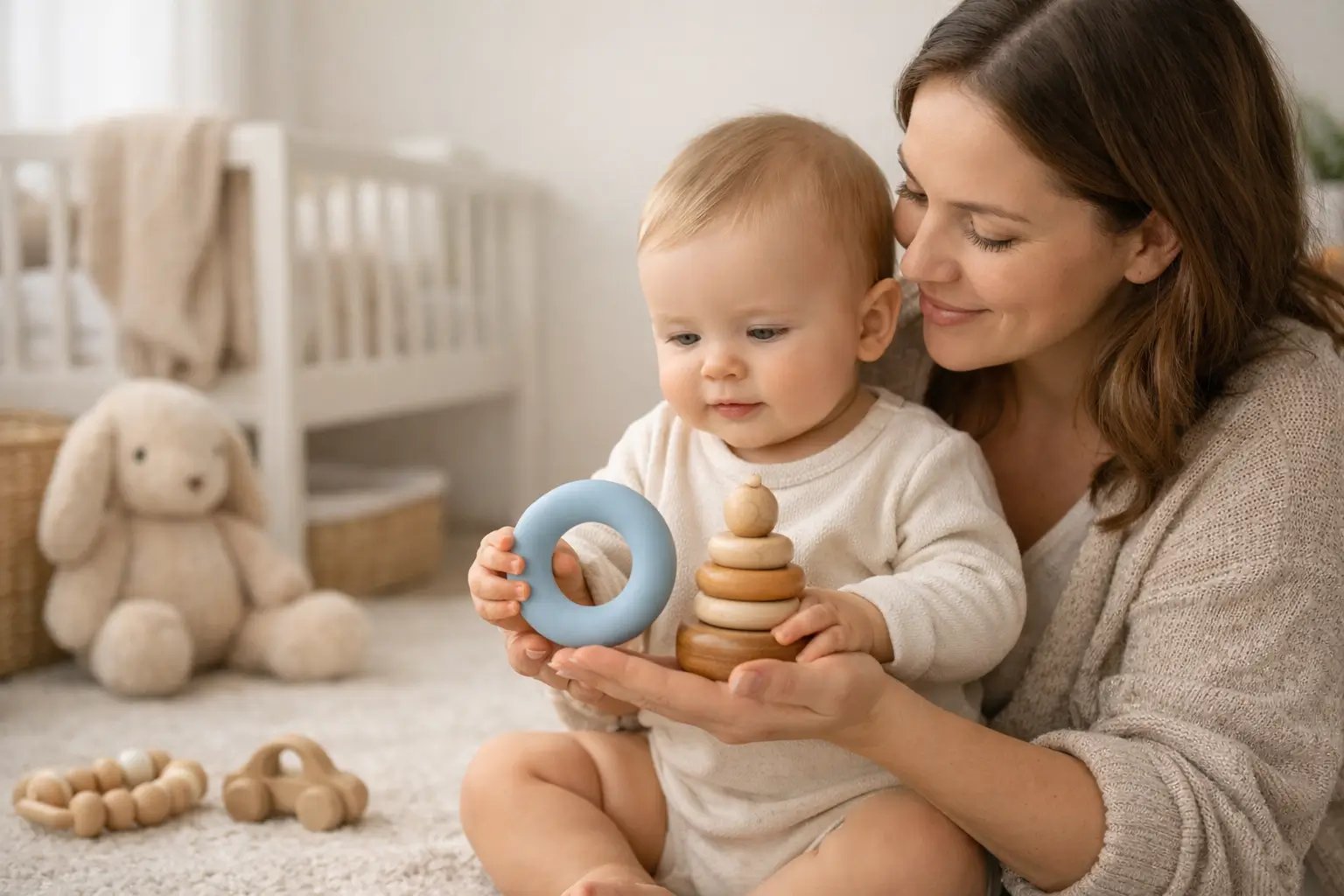
If you are a first-time parent, choosing baby toys can feel surprisingly stressful. Toys look colorful and cheerful on the outside, yet many parents quietly worry about what might be hiding inside the materials. You may have heard about chemicals in plastics, toxic paints, or recalls on unsafe products, and it is normal to feel unsure about what is truly safe for your baby.
Non-toxic baby toys matter because babies explore the world with their mouths, hands, and developing brains. During the first few years of life, their bodies absorb substances more easily than adults. This means the materials in toys can play a small but meaningful role in overall health, comfort, and development.
The good news is that you do not need to be an expert to make safe choices. With a little knowledge and a calm, thoughtful approach, you can confidently choose toys that support your baby’s growth without unnecessary worry.
Table of Contents
What “Non-Toxic” Really Means for Baby Toys
When parents hear the term “non-toxic,” it often sounds reassuring but vague. In simple terms, non-toxic baby toys are toys made without harmful chemicals or heavy metals that could affect a baby’s health when touched, chewed, or mouthed.
However, not every label tells the full story. Phrases like “eco-friendly,” “natural,” or “green” are often used in marketing but are not legally regulated in many countries. A toy can look wholesome and still contain materials you may want to avoid.
Safety standards also vary around the world. Some regions enforce stricter testing than others. That is why understanding materials and certifications is just as important as trusting brand claims.
Harmful Materials to Avoid in Baby Toys
Babies are biologically more vulnerable because their organs are still developing, their skin is more absorbent, and they frequently put toys in their mouths. Avoiding certain materials helps reduce unnecessary exposure.
Common materials parents should avoid
- BPA, BPS, and phthalates
Often found in plastics. These chemicals can interfere with normal hormone function and are especially concerning for babies who mouth toys. - Lead, mercury, and cadmium
Heavy metals sometimes found in paints or low-quality metal parts. Even small amounts can affect brain development over time. - PVC and formaldehyde
PVC is a soft plastic that may release harmful additives. Formaldehyde can be present in glues or coatings and may irritate airways and skin. - Toxic paints and surface coatings
Paint that chips easily can expose babies to unsafe pigments, especially during teething. - Artificial fragrances
Added scents can trigger skin irritation or sensitivity and offer no benefit to a baby.
Choosing toys without these materials reduces risk without needing to be perfect or extreme.
Safest Materials for Baby Toys
Some materials have a longer track record of safety when properly sourced and finished.
Solid wood
- Best when unfinished or finished with natural, water-based oils
- Durable and less likely to harbor chemicals
- Always check for smooth edges and secure construction
Food-grade silicone
- Soft, flexible, and ideal for teething
- Heat-resistant and easy to clean
- Ensure it is labeled food-grade and free from fillers
Organic cotton and natural fabrics
- Gentle on sensitive skin
- Ideal for soft toys, blankets, and play mats
- Look for undyed or low-impact dyed options
Natural rubber
- Common in teethers
- Naturally flexible and engaging for babies
- Avoid prolonged sun exposure to prevent breakdown
Stainless steel
- Safe for older babies when used appropriately
- Free from chemical coatings
- Best for rattles or containers designed for infants
Certifications and Labels Parents Should Trust
Certifications help cut through marketing noise. While no label guarantees perfection, these standards indicate meaningful safety testing.
| Certification | What it Means | Why It Matters |
|---|---|---|
| ASTM F963 | US toy safety standard | Covers chemical, physical, and mechanical safety |
| CPSIA | US consumer product law | Limits lead and phthalates in children’s products |
| CE Mark | European safety compliance | Indicates conformity with EU safety rules |
| EN71 | European toy safety testing | Includes chemical and mechanical safety checks |
| FSC | Responsible wood sourcing | Supports safer, sustainable wood materials |
| GOTS | Organic textile certification | Limits harmful chemicals in fabrics |
Looking for one or more of these labels adds an extra layer of confidence.
Age-Appropriate Safety Considerations
A toy can be non-toxic and still unsafe if it is not age appropriate.
- Choking hazards
Avoid small parts for babies under three years. - Teething stage needs
Choose chew-safe materials that do not chip or peel. - Paint durability
Paint should not scratch off easily when bitten. - Size, weight, and edges
Toys should be lightweight, smooth, and easy for small hands to grip.
How to Read Toy Labels Like a Pro
Toy packaging can be confusing, but a few habits make it easier.
Words worth looking for
- BPA-free, phthalate-free
- Water-based paint
- Food-grade silicone
- Tested to ASTM or EN71 standards
Claims to treat carefully
- “All natural”
- “Eco-friendly”
- “Green toy”
Packaging red flags
- No manufacturer information
- No age recommendation
- Strong chemical smell when opened
Trust your instincts. If something feels off, it is okay to skip it.
Budget-Friendly Tips for Choosing Non-Toxic Toys
Safe toys do not have to be expensive.
- Fewer, well-made toys are often better than many low-quality ones
- Open-ended toys support longer use and creativity
- Rotate toys instead of constantly buying new ones
Second-hand toy safety checklist
- Avoid older plastic toys with unknown materials
- Skip toys with peeling paint or rust
- Clean thoroughly before use
- Avoid recalled or very old products
Expert Tips for Parents
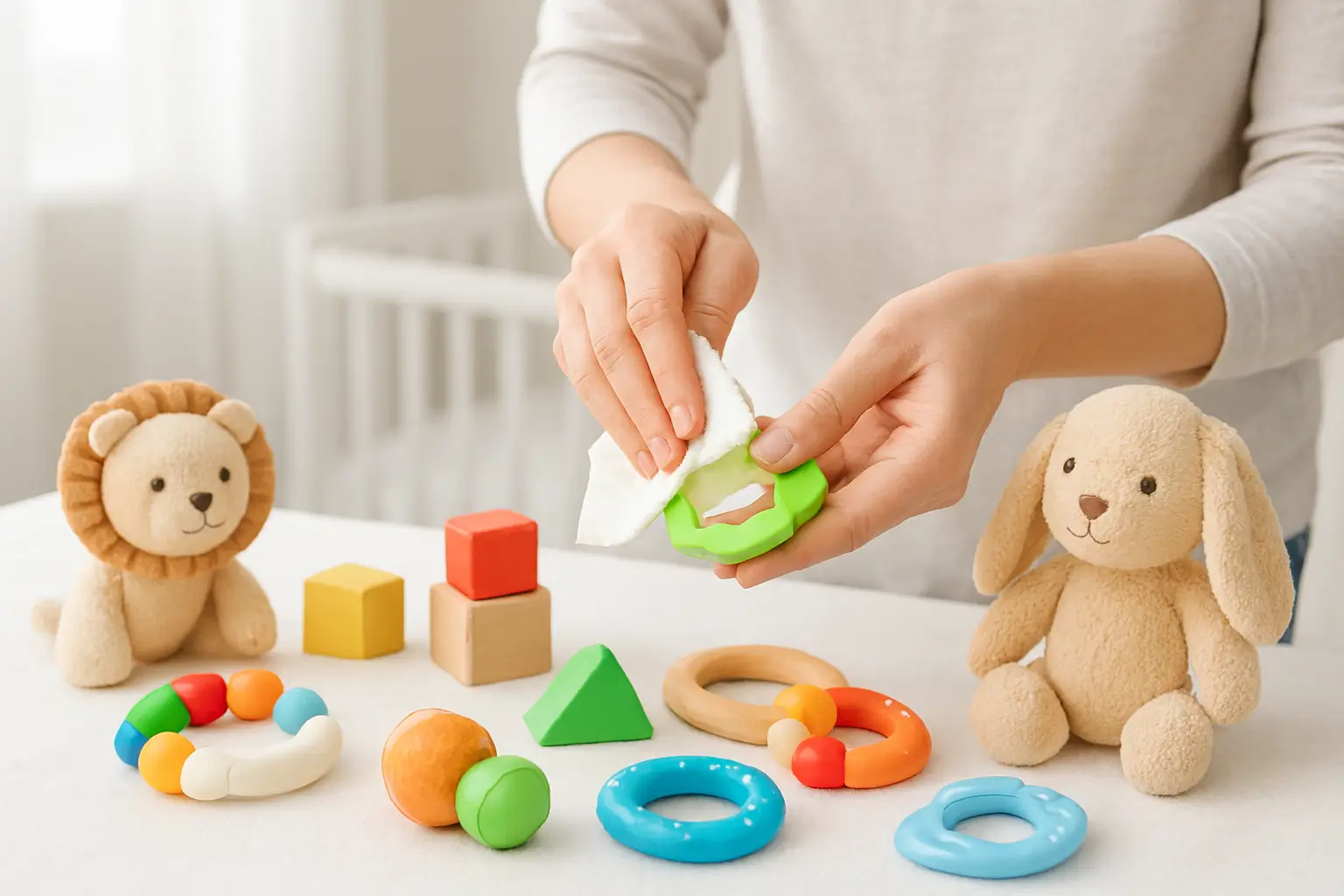
- Cleaning and maintenance
Wash toys regularly using mild soap and water. Avoid harsh cleaners. - When to discard toys
Throw away toys that crack, chip, or develop loose parts. - Toy rotation
Rotating toys reduces wear and keeps playtime engaging and safe.
Frequently Asked Questions About Non-Toxic Baby Toys
Are wooden toys always non-toxic?
No. Wood is safer when unfinished or finished with non-toxic paints or oils.
Are plastic toys safe for babies?
Some plastics are safe if they are BPA-free, phthalate-free, and certified.
How can I test toys at home?
You cannot reliably test chemicals at home. Focus on materials, labels, and trusted brands.
Are imported toys safe?
Imported toys can be safe if they meet recognized safety standards and certifications.
What is the safest toy for teething babies?
Food-grade silicone or natural rubber teethers designed specifically for infants.
Conclusion: Confident Choices Without Fear
Choosing non-toxic baby toys is not about being perfect. It is about being informed, calm, and intentional. When you understand materials, labels, and age-appropriate needs, you can shop with confidence instead of worry.
Mindful buying helps protect your baby’s health while also creating a simpler, more meaningful play environment. Trust yourself. Small, thoughtful choices add up.
Read more:
- Best Educational Toys for BabiesDiscover the best educational toys for babies that boost learning, creativity, and development through fun, sensory-rich, and age-appropriate play experiences.
- Best Bath Toys for ToddlersDiscover the best bath toys for toddlers that make bath time fun, safe, and educational while encouraging creativity, motor skills, and sensory learning.
- How to Choose the Best Baby Rattles for Your BabyDiscover how to choose the best baby rattles that are safe, engaging, and perfect for your baby’s developmental milestones.
- Best Pop Up Toys for Babies: A Fun Way to Boost Early LearningExplore the best pop up toys for babies that make learning fun while boosting motor skills and curiosity.
- Stacking and Sorting Toys for Kids with AutismExplore the best sorting toys for kids with autism that make learning fun, sensory-friendly, and skill-building through joyful play.