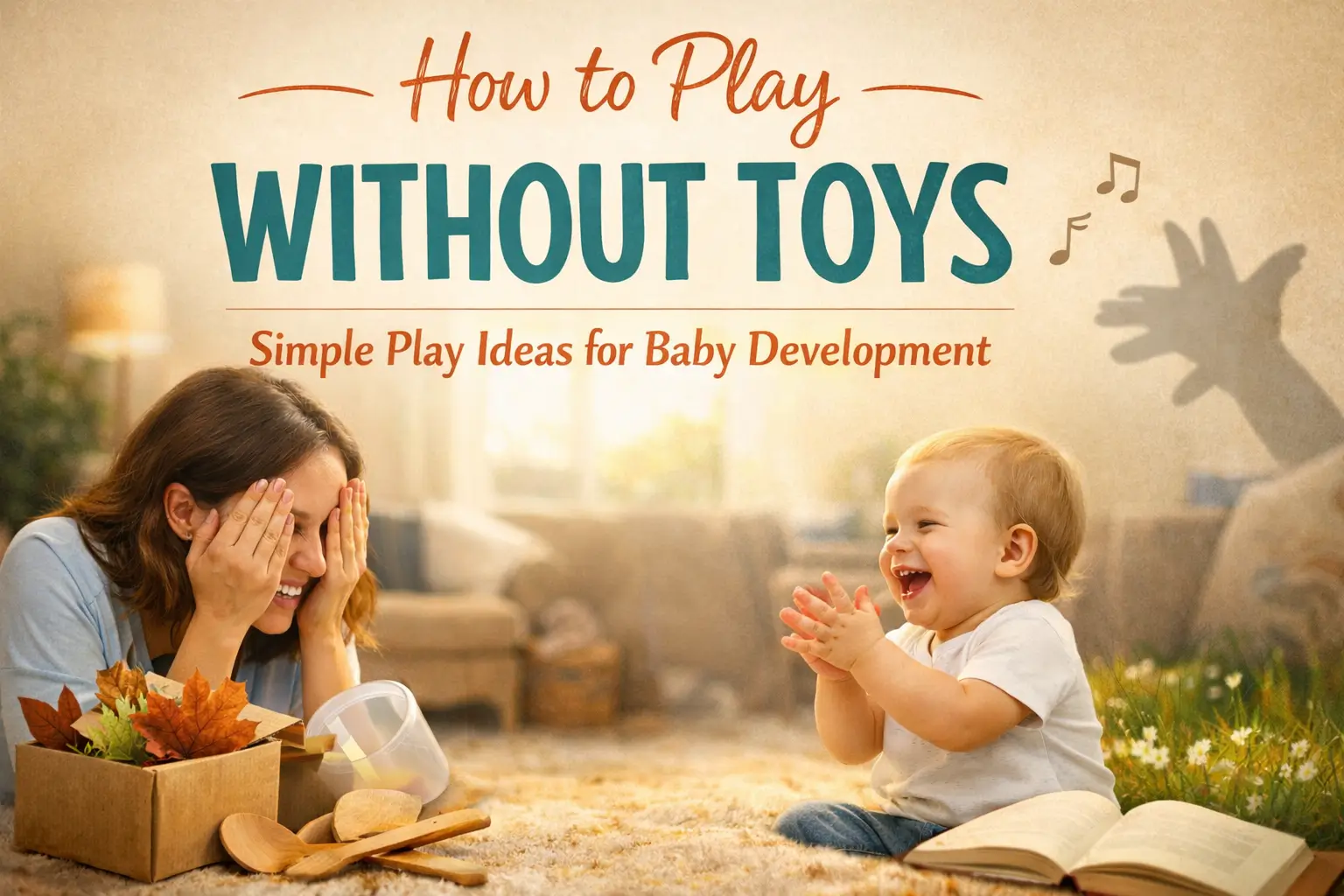
As a new parent, it is easy to believe that toys are essential for your baby’s development. Stores, ads, and social media often suggest that more toys equal better learning. But the truth is reassuring and simple.
Some of the most powerful play experiences do not require toys at all.
Your voice, your face, your touch, and everyday moments are more than enough to help your baby grow, learn, and feel secure.
This guide will show you how to play without toys in ways that are fun, natural, and deeply beneficial for your child’s development.
Table of Contents
Why Playing Without Toys Is Important
Play is how babies understand the world. Research in early childhood development shows that responsive, interactive play supports:
- Brain development
- Language and communication skills
- Emotional security and bonding
- Physical coordination and movement
Toy free play encourages creativity, curiosity, and connection. It also removes pressure from parents to constantly buy or rotate toys.
Most importantly, it reminds us that you are your baby’s favorite play partner.
15 Fun, Easy, and Development-Boosting Ideas for New Parents
Explore proven ways to play without toys that support healthy baby development and parent-child bonding.
1. Peek-a-Boo
Peek-a-boo is one of the simplest and most effective games for babies. Cover your face with your hands or a cloth, then reveal yourself with a smile.
This game helps babies learn that people still exist even when they cannot be seen.
Developmental benefits:
- Builds object permanence
- Strengthens social bonding
- Encourages laughter and eye contact
2. Singing and Talking Together
You do not need a perfect singing voice. Babies love hearing familiar voices more than polished performances.
Sing lullabies, nursery rhymes, or even narrate what you are doing during daily routines.
Why it works:
- Supports early language development
- Helps babies recognize tone and rhythm
- Builds emotional connection
3. Mirror Play
Hold your baby in front of a mirror and talk about what they see. Smile, make faces, and point to facial features.
This simple activity supports self awareness and visual tracking.
Tip:
A household mirror or reflective surface works just fine.
4. Clapping and Hand Games
Games like pat-a-cake or gentle clapping help babies understand rhythm and movement.
Hold your baby’s hands and clap slowly while smiling and speaking.
Skills developed:
- Hand-eye coordination
- Motor planning
- Social interaction
5. Gentle “Simon Says”
For older babies and toddlers, try simple instructions such as:
- Touch your nose
- Wave hello
- Clap your hands
This helps develop listening skills and body awareness.
6. Exploring Everyday Household Items
You do not need toys when your home is full of interesting objects.
Safe items like:
- Plastic containers with lids
- Wooden spoons
- Empty boxes
- Scarves or soft cloths
Allow your baby to explore under supervision.
Always check for safety and choking risks.
7. Outdoor Play and Nature Walks
Fresh air offers endless stimulation. Take your baby outside and let them observe:
- Trees and leaves
- Birds and sounds
- Sunlight and shadows
Nature supports sensory development and helps babies feel calm and curious.
8. Storytelling Without Books
You can tell simple stories using your voice and expressions. Describe your day, make up silly characters, or repeat familiar routines as stories.
This builds imagination and listening skills.
9. Dancing Together
Turn on music and gently sway, bounce, or dance with your baby.
Movement combined with music supports physical coordination and emotional joy.
10. Tummy Time Play
Tummy time strengthens neck, shoulder, and core muscles. Make it playful by:
- Lying face to face
- Talking and smiling
- Encouraging reaching and movement
A few minutes several times a day makes a big difference.
11. “Where Is It?” Games
Point to body parts and name them slowly.
For example:
- Where is your nose?
- Where are your ears?
This supports early language and body recognition.
12. Follow the Leader
Move slowly around the room and let your baby follow you by crawling, rolling, or walking.
This encourages coordination and imitation.
13. Copy Me Games
Babies love to imitate. Clap, wave, or make funny faces and watch them try to copy you.
Imitation is an early learning skill and a sign of healthy development.
14. Sensory Play With Textures
Let your baby feel different safe textures like:
- Soft blankets
- Smooth fabrics
- Crinkly paper
This supports sensory awareness and curiosity.
15. Shadow Play
Use natural light or a lamp to create shadows on the wall. Move your hands slowly and let your baby watch the shapes.
This encourages visual tracking and wonder.
Final Thoughts for New Parents
You do not need expensive toys to raise a curious, happy, and confident child.
Your attention, love, and presence are the most powerful tools you have.
Playing without toys:
- Reduces stress for parents
- Encourages creativity
- Strengthens emotional bonds
Remember, your baby does not need more things. Your baby needs more moments with you.
Frequently Asked Questions (FAQs): How to Play Without Toys
Is it okay for babies to play without toys?
Yes. Playing without toys is not only okay but highly beneficial. Babies learn best through interaction, movement, and sensory experiences. Your voice, facial expressions, and everyday activities provide powerful learning opportunities.
At what age can babies play without toys?
Babies can benefit from toy-free play from birth. Newborns respond to voices, touch, and eye contact, while older babies enjoy movement, imitation, and exploration using household items and their surroundings.
How does toy-free play support baby development?
Toy-free play helps develop language skills, emotional bonding, motor coordination, and problem-solving abilities. It also encourages imagination and reduces overstimulation caused by too many toys.
Can playing without toys improve bonding with my baby?
Absolutely. When you play without toys, your baby focuses on you. This strengthens emotional connection, builds trust, and supports secure attachment between parent and child.
How much toy-free play does my baby need each day?
There is no fixed rule. Even short, frequent moments throughout the day are effective. Talking, singing, cuddling, and interactive play during daily routines all count as valuable playtime.
Are household items safe for baby play?
Many household items can be used safely if they are clean, non-toxic, and too large to be a choking hazard. Always supervise your baby and avoid small, sharp, or breakable objects.
Will my baby fall behind without educational toys?
No. Research shows that responsive interaction and play are more important than toys for early learning. Educational toys can be helpful, but they are not required for healthy development.
How do I keep toy-free play interesting?
Rotate activities, follow your baby’s cues, and change locations. Singing, storytelling, movement, outdoor time, and simple sensory play help keep experiences fresh and engaging.
Can toddlers also benefit from playing without toys?
Yes. Toddlers benefit greatly from pretend play, movement games, storytelling, and imitation. These activities support creativity, language development, and independence.
Is toy-free play better than playing with toys?
Toy-free play is not better or worse. It complements toy-based play. A healthy balance of both allows children to develop naturally while enjoying meaningful interaction with caregivers.
Read More:
- Best Educational Toys for BabiesDiscover the best educational toys for babies that boost learning, creativity, and development through fun, sensory-rich, and age-appropriate play experiences.
- Best Bath Toys for ToddlersDiscover the best bath toys for toddlers that make bath time fun, safe, and educational while encouraging creativity, motor skills, and sensory learning.
- How to Choose the Best Baby Rattles for Your BabyDiscover how to choose the best baby rattles that are safe, engaging, and perfect for your baby’s developmental milestones.
- Best Pop Up Toys for Babies: A Fun Way to Boost Early LearningExplore the best pop up toys for babies that make learning fun while boosting motor skills and curiosity.
- Stacking and Sorting Toys for Kids with AutismExplore the best sorting toys for kids with autism that make learning fun, sensory-friendly, and skill-building through joyful play.