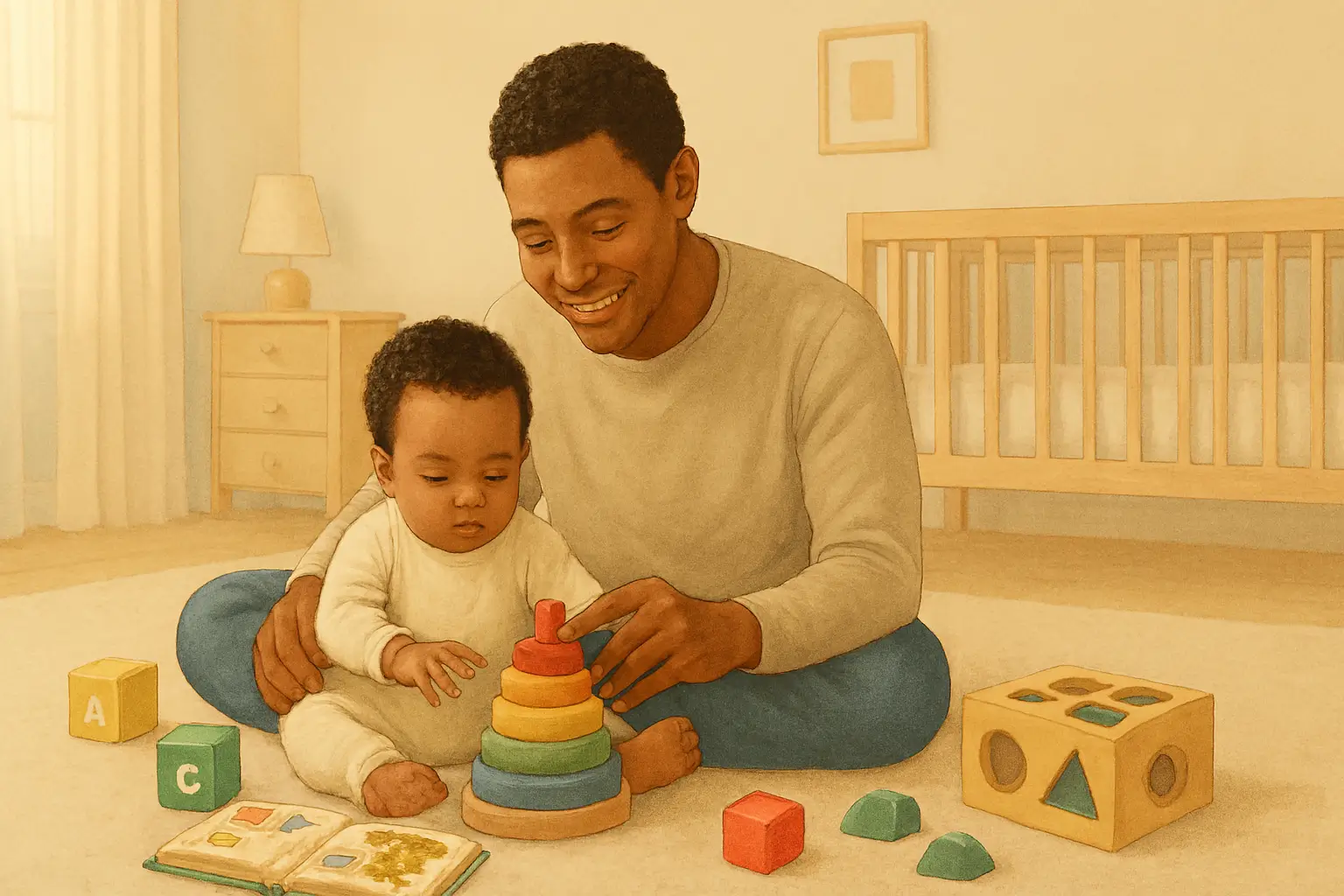
Bringing home your first baby is pure joy. As your child grows, one of the most exciting milestones is introducing toys that support learning and development. But with so many options available and endless advice online, new parents often wonder: When is the right time to introduce educational toys? This blog will guide you step by step, backed by research from child development science and expert pediatric recommendations.
Table of Contents
What Are Educational Toys?
Educational toys are tools designed to support children’s cognitive, motor, language, and social development. These toys encourage:
- Exploration and problem solving
- Hand-eye coordination
- Language and communication skills
- Imagination and creativity
Unlike toys that serve only entertainment, educational toys stimulate the brain while keeping children engaged.
Why Timing Matters
Children’s brains develop rapidly during the first five years of life. This period is sometimes called a “sensitive period” for learning. Research from developmental psychologists shows that the brain forms millions of new neural connections, especially when a child interacts with the environment in meaningful ways. Toys that match a child’s developmental stage make learning easier, more enjoyable, and more effective.
If a toy is introduced too early, it can cause frustration or be unsafe. If introduced too late, the opportunity to support a critical skill may be reduced. The key is alignment with developmental readiness.
The Developmental Play Timeline
Below is a simple guide to introducing educational toys based on your child’s age and developmental milestones. Each stage includes what your child is learning and the types of toys that support that learning.
0 to 3 Months: Sensing the World
At this age, babies are learning to see, hear, and feel. Their vision is still developing and they are drawn to high contrast patterns and gentle movement.
What They Are Learning
- Tracking objects with their eyes
- Responding to sound and touch
- Recognizing faces
Recommended Toys
- High contrast patterns or black and white cards
- Soft rattles that make gentle sounds
- Textured cloth books
Scientific Basis
Newborn vision is limited to high contrast. Studies show infants respond more to black and white patterns and may experience improved visual tracking with contrast stimulation.
4 to 7 Months: Cause and Effect
Babies begin coordinating their hands and eyes. They love exploring objects with their mouths. They also begin to understand that their actions have results.
What They Are Learning
- Reaching and grasping
- Dropping and picking up objects
- Understanding cause and effect
Recommended Toys
- Soft blocks
- Rings to stack
- Simple rattles
Tip from Research
Repetitive play with cause and effect toys supports cognitive development. Infants begin to understand that their actions (like shaking a rattle) produce predictable results, strengthening early problem solving skills.
8 to 12 Months: Movement and Exploration
During this age range, children start crawling and standing. Their hands become more skilled, and they enjoy toys that respond to actions.
What They Are Learning
- Hand-eye coordination
- Object permanence
- Early language cues
Recommended Toys
- Push and pull toys
- Shape sorters with large shapes
- Board books with textures
Evidence-Based Tip
Shape sorting supports early spatial reasoning and fine motor control. Studies show that children who practice shape sorting often develop stronger problem solving skills by age two.
1 to 2 Years: Language and Imitation
Toddlers are becoming explorers. They imitate adults and love toys that let them pretend and communicate.
What They Are Learning
- Imitation and pretend play
- Vocabulary explosion
- Walking and running coordination
Recommended Toys
- Simple puzzles with pegs
- Pretend play sets (kitchen, animal sets)
- Large crayons and washable coloring materials
Backed by Research
Pretend play encourages language skills and social understanding. Children who engage in play acting often show greater emotional regulation and storytelling ability by preschool age.
2 to 3 Years: Complex Problem Solving
At this stage, toddlers tackle more complex challenges. Their attention span grows and fine motor skills improve.
What They Are Learning
- Early logic skills
- Cooperative play
- Basic counting and sorting
Recommended Toys
- Nested blocks
- Interactive storybooks
- Numbers and letters puzzles
Scientific Insight
Early literacy activities such as labeling objects and reading aloud build foundational language skills. Research shows that reading with toddlers contributes to later success in reading and math.
How to Choose the Right Toy
When choosing educational toys, consider the following:
1. Safety First
Choose age-appropriate toys with no small parts for young babies. Always check labels for safety ratings.
2. Simple Beats Overstimulating
Contrary to marketing hype, simple toys often encourage more creative play than electronic, sound-heavy toys.
3. Look for Open-Ended Play
Toys that can be used in different ways (blocks, stacking cups, simple figures) foster creativity and problem solving.
4. Follow Your Child’s Interests
Children are more engaged when they are interested. Let their curiosity guide your choices.
Tips for Parents
1. Play With Your Child
Your presence matters more than the toy. Joint attention while playing strengthens bonds and supports language growth.
2. Rotate Toys
Keep play fresh by rotating sets every few weeks. This keeps interest high without overwhelming your child.
3. Observe and Adjust
Some children may master certain toys quickly. When play becomes repetitive with no challenge, it may be time for the next stage.
Closing remarks
Introducing educational toys at the right time is not about following a strict schedule. It is about understanding your child’s developmental readiness. When toys match developmental skills, play becomes powerful learning.
Remember that every child develops at their own pace. Use this guide as a foundation, but trust your instincts as a parent. With thoughtful toy choices and supportive engagement, you are giving your child tools that build a lifetime of learning.
Frequently Asked Questions (FAQs): How to Introduce Educational Toys at the Right Time
When should I start introducing educational toys to my baby?
You can introduce simple educational toys from birth. Newborns benefit from high contrast visuals, gentle sounds, and textured materials. As your baby grows, toys should evolve to match their developmental milestones rather than their exact age.
Are educational toys really important for baby development?
Yes. Research shows that age appropriate toys support brain development, motor skills, language acquisition, and problem solving. The most effective learning happens when toys are paired with caregiver interaction and guided play.
How do I know if a toy is age appropriate?
Check the manufacturer’s age recommendation and observe how your child interacts with the toy. If your baby can explore it safely without frustration and stays engaged, the toy is likely appropriate. Avoid toys that are too complex or overstimulating.
Can too many toys slow down learning?
Yes. Studies suggest that having too many toys at once can reduce focus and creativity. Rotating a small number of educational toys encourages deeper play and better learning outcomes.
Are electronic educational toys better than simple toys?
Not necessarily. Research indicates that simple, open ended toys such as blocks and puzzles often support more creative and cognitive development than electronic toys with lights and sounds. Human interaction remains the most powerful learning tool.
How often should parents play with their child using educational toys?
Daily play is ideal, even in short sessions. Just ten to fifteen minutes of focused, interactive play can significantly support language development and emotional bonding.
What educational toys are best for toddlers?
Toddlers benefit from puzzles, pretend play sets, building blocks, and books that encourage language and imagination. Toys that involve sorting, stacking, and problem solving are especially effective.
Should I follow age guidelines strictly when choosing toys?
Age guidelines are helpful, but every child develops at a unique pace. Use them as a reference, then adjust based on your child’s abilities, interests, and safety needs.
Can educational toys replace reading and talking to my child?
No. Educational toys should support learning, not replace interaction. Reading, singing, and talking to your child remain essential for healthy brain and language development.
Read more:
- Best Educational Toys for BabiesDiscover the best educational toys for babies that boost learning, creativity, and development through fun, sensory-rich, and age-appropriate play experiences.
- Best Bath Toys for ToddlersDiscover the best bath toys for toddlers that make bath time fun, safe, and educational while encouraging creativity, motor skills, and sensory learning.
- How to Choose the Best Baby Rattles for Your BabyDiscover how to choose the best baby rattles that are safe, engaging, and perfect for your baby’s developmental milestones.
- Best Pop Up Toys for Babies: A Fun Way to Boost Early LearningExplore the best pop up toys for babies that make learning fun while boosting motor skills and curiosity.
- Stacking and Sorting Toys for Kids with AutismExplore the best sorting toys for kids with autism that make learning fun, sensory-friendly, and skill-building through joyful play.