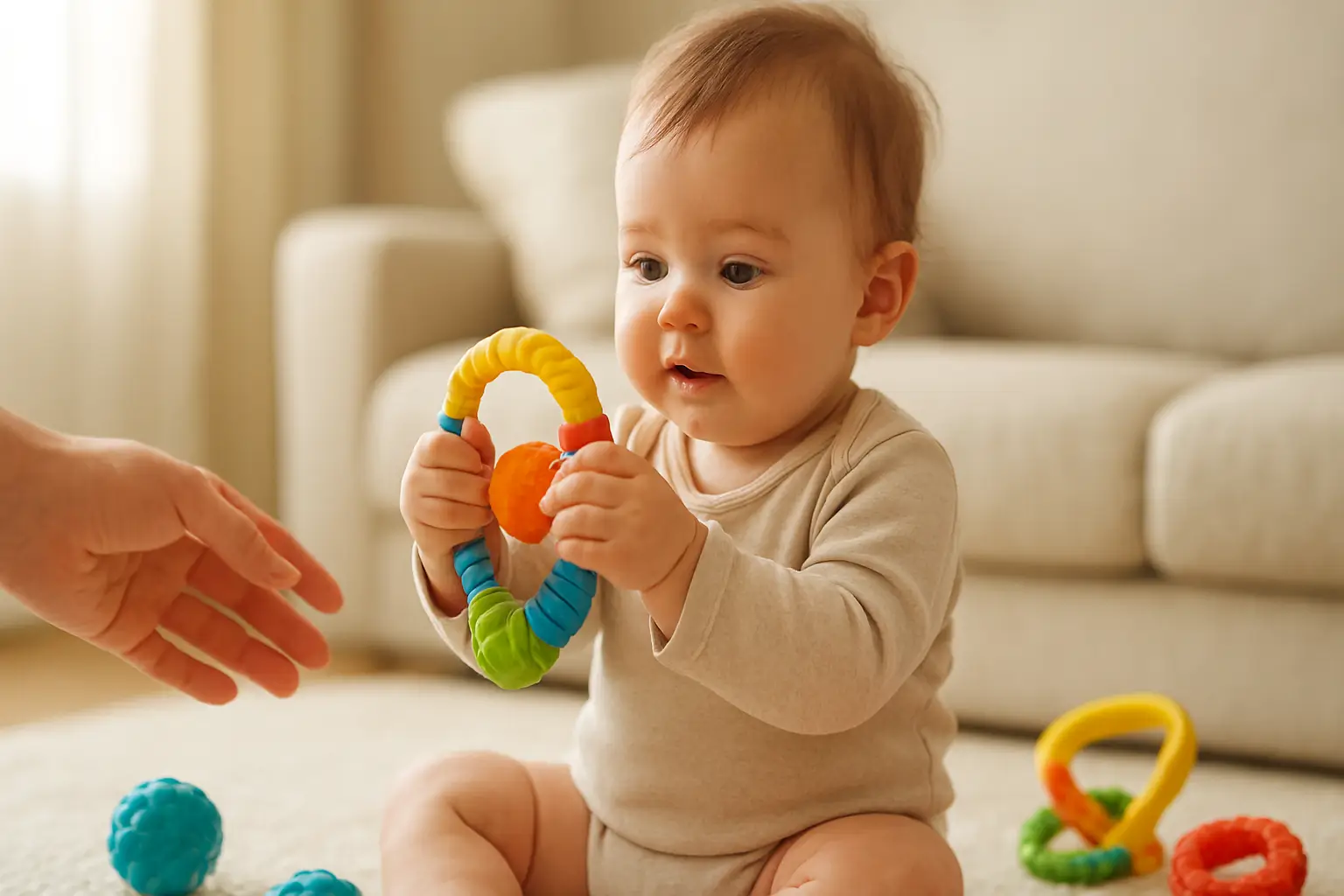
From the first curious glance at a high-contrast card to the joyful clap after stacking two blocks — every moment of play builds your baby’s brain.
Toys aren’t magic gadgets; they’re tools that create experiences — sights, sounds, textures, and emotional exchanges — that shape neural connections.
In this educational guide, you’ll learn how toys support sensory, motor, cognitive, language, and social brain development. We’ll also cover the best types of baby brain development toys, play strategies, and practical tips for parents and caregivers.
Table of Contents
🍼 Baby Brain Development Toys: How They Help in Brain Development
Let’s explore how toys help baby brain development:
🧠 1. A Quick Primer: How Baby Brains Develop
A baby’s brain develops more in the first three years than at any other time in life.
Every sound, texture, color, and smile strengthens new neural pathways.
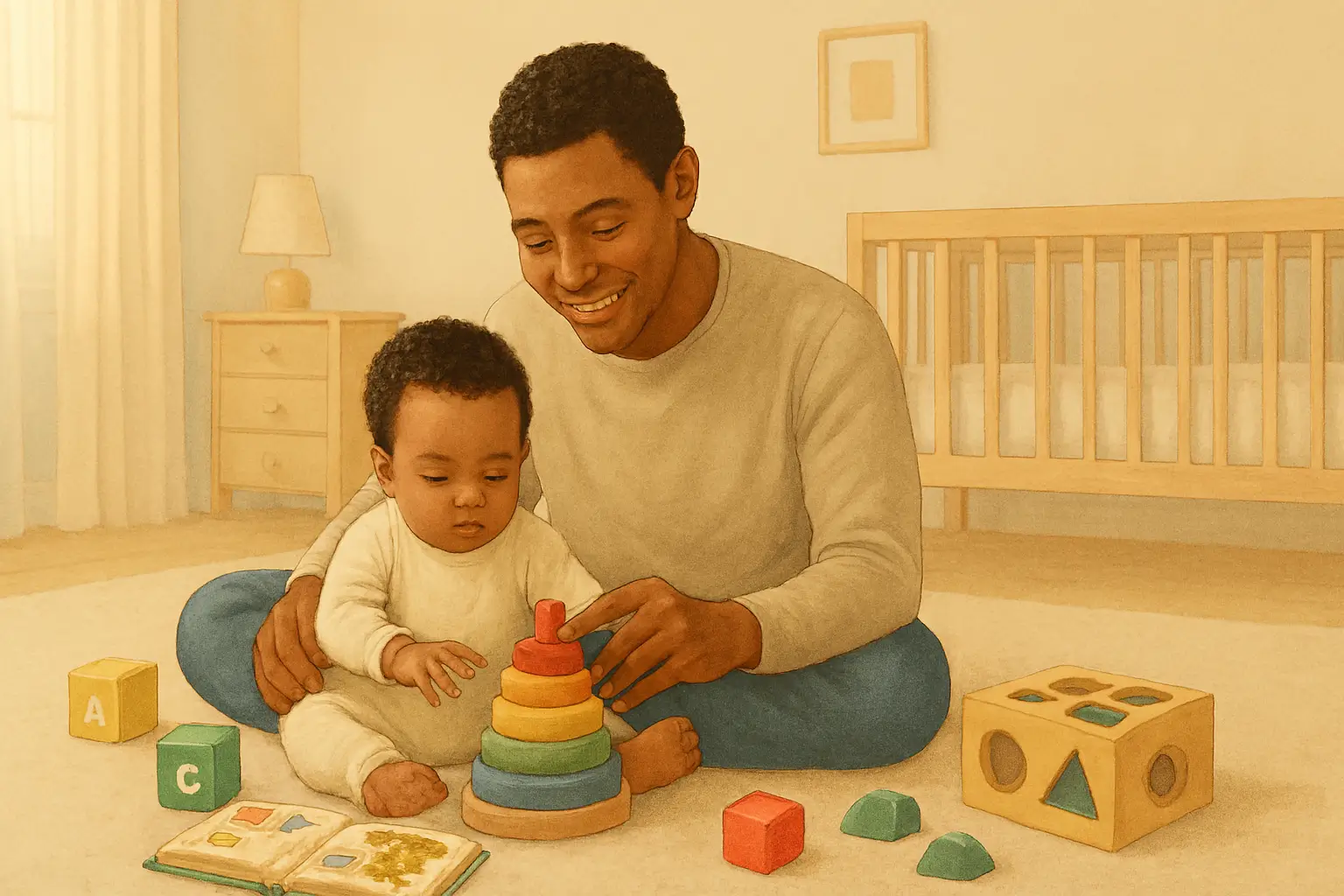
Responsive play, often called “serve and return,” happens when a caregiver responds to a baby’s coos, gestures, or looks. This back-and-forth interaction is the foundation for brain growth, emotional security, and learning.
🎯 2. How Toys Help Baby Brain Development
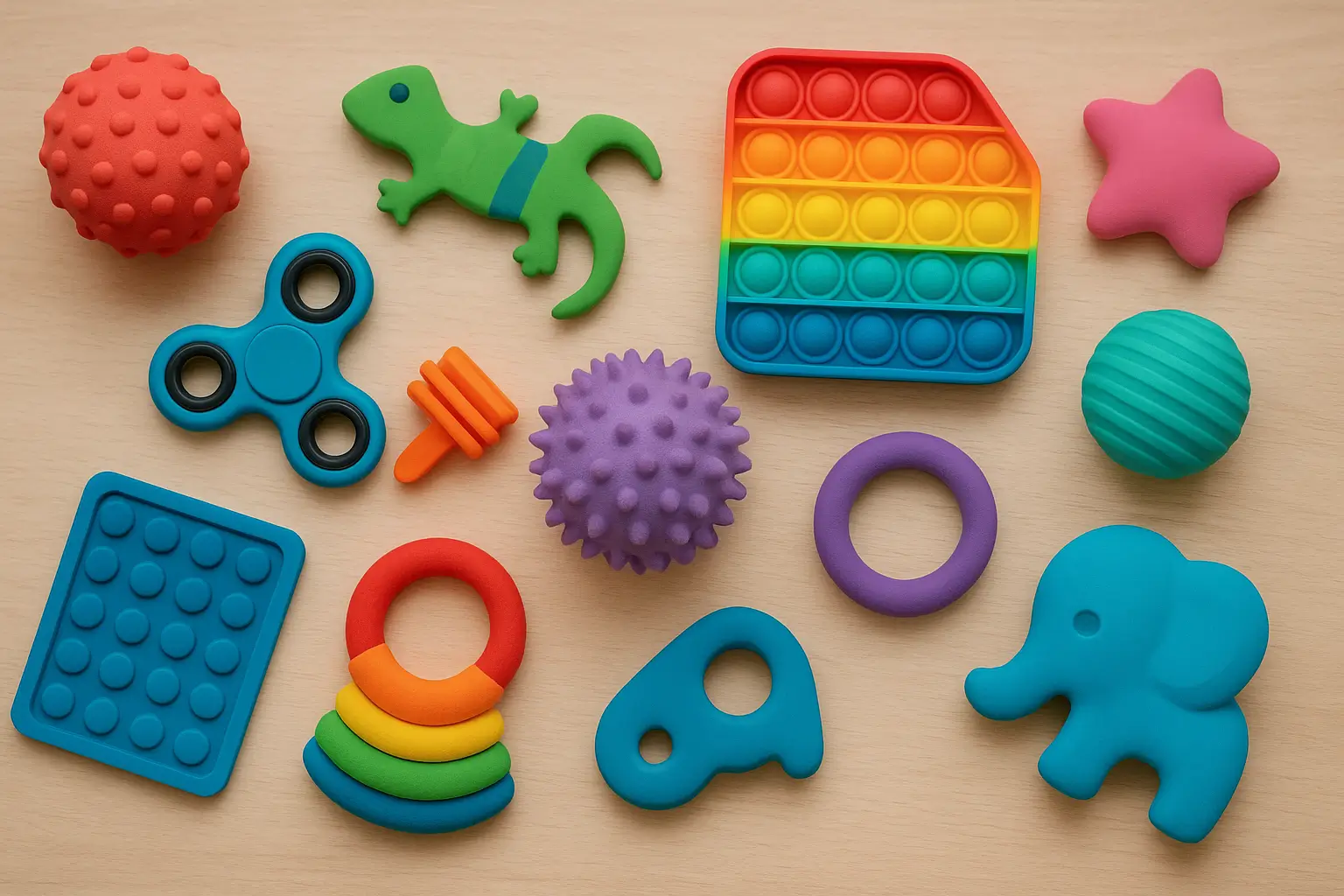
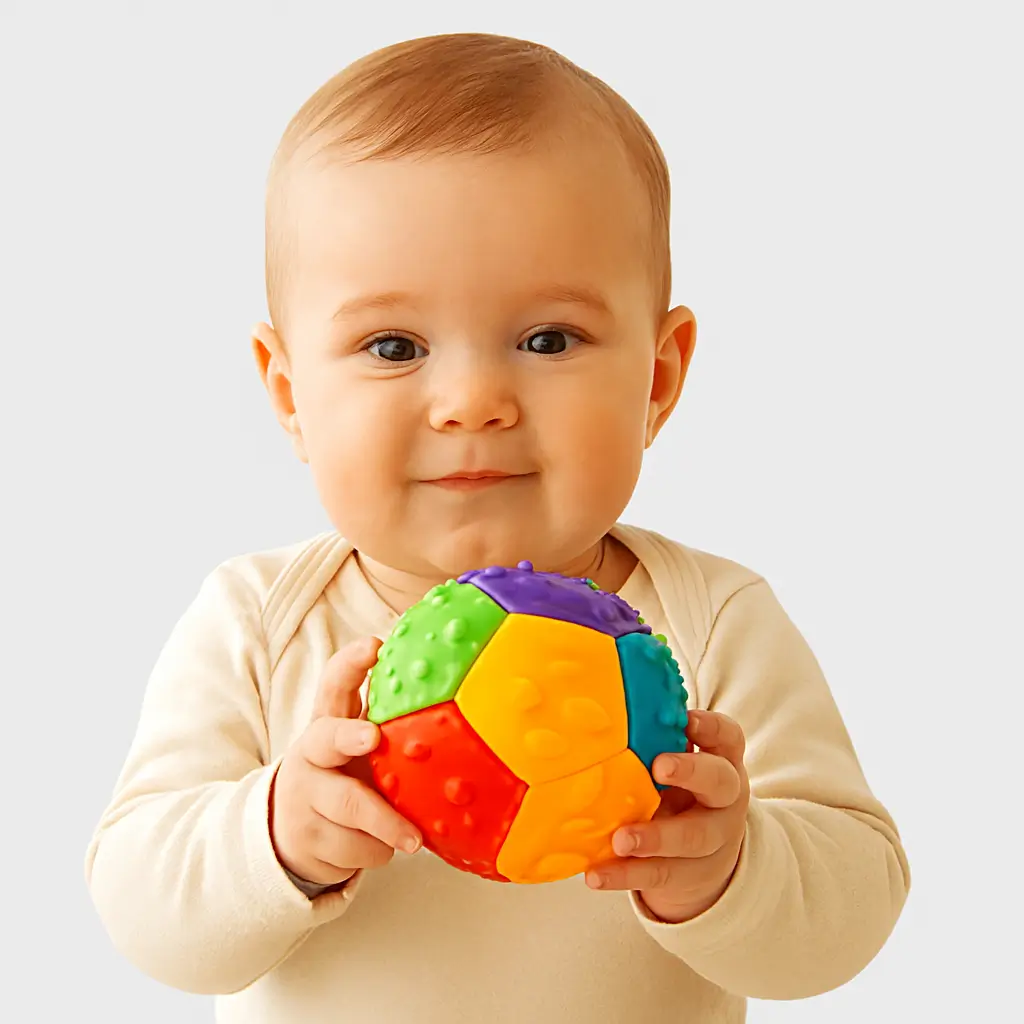
Sensory Stimulation: Sights, Sounds, and Textures
Colorful, soft, or musical toys help infants connect sensory input with emotional reactions.
High-contrast cards and rattles build visual tracking and auditory awareness.
Motor Skills & Coordination
Toys that encourage reaching, grasping, pushing, or crawling help the brain refine movement control.
Each attempt strengthens motor mapping and hand-eye coordination.
Cognitive Skills: Cause and Effect
Simple toys that pop, spin, or make noise when pressed help babies learn cause and effect — the foundation for logic and reasoning.
Language and Social Development
When caregivers label toys (“ball,” “teddy”), babies connect sounds with objects, developing early vocabulary and communication skills.
Executive Function: Focus and Memory
Games involving turn-taking or waiting strengthen attention span and self-regulation — skills that prepare children for school readiness.
🎲 3. Best Baby Brain Development Toys by Age
Tip: Simple, open-ended toys are best. Flashy lights can distract; genuine interaction builds brains.
Newborn to 3 Months
- High-contrast black-and-white cards or mobiles
- Soft rattles with gentle sounds
- Crinkle cloths and soft textures
🧩 Why they help: Support visual and auditory development while encouraging caregiver bonding.
3–6 Months
- Soft textured teethers
- Play gyms and activity mats
- Baby-safe mirrors
🧩 Why they help: Boost motor control, sensory exploration, and self-recognition.
6–12 Months
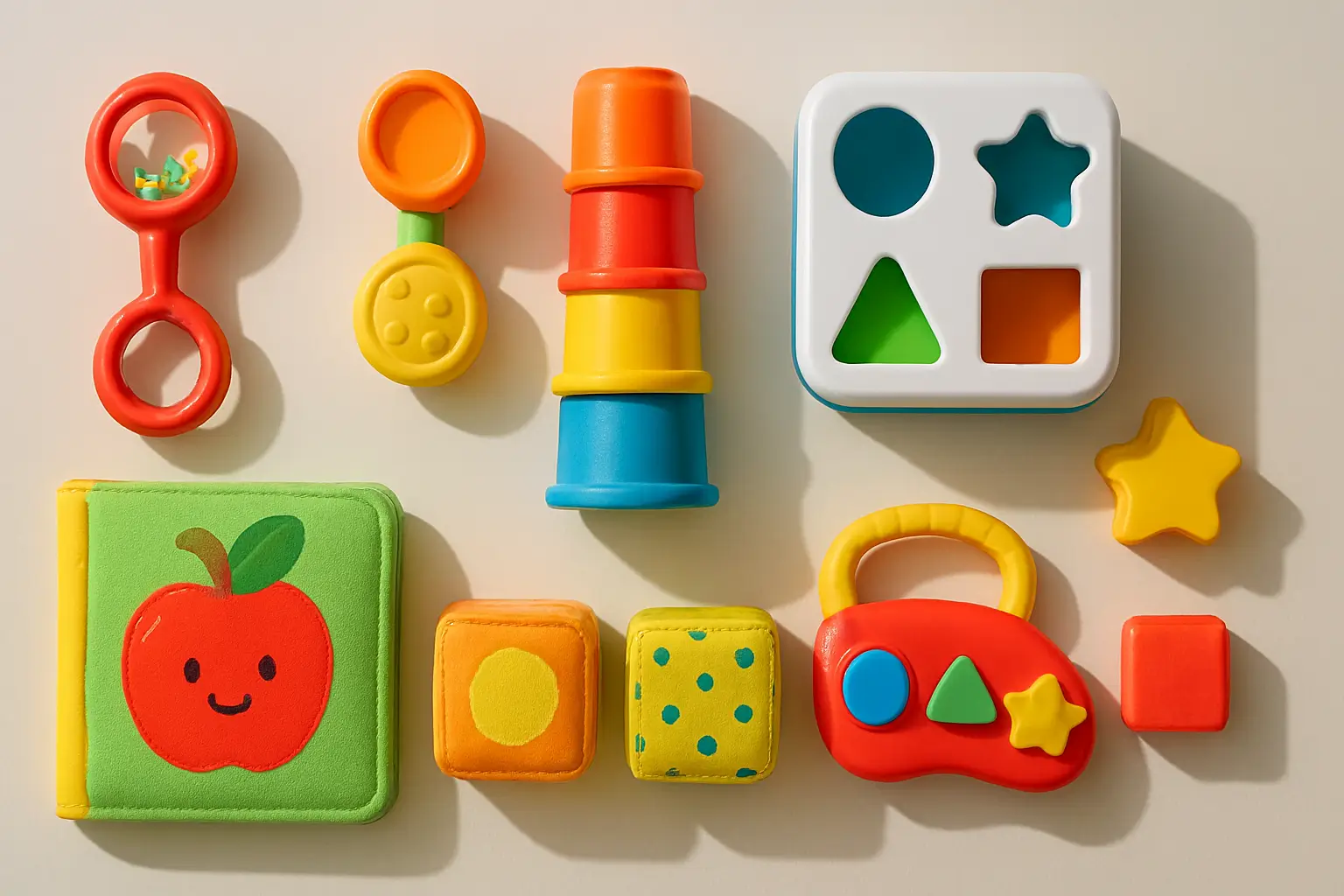
- Stacking rings and nesting cups
- Shape sorters with large pieces
- Rolling or push toys
🧩 Why they help: Encourage problem-solving, hand-eye coordination, and balance.
12–24 Months
- Board books with textures and flaps
- Chunky puzzles and building blocks
- Pretend play sets (toy food, phone, or dolls)
🧩 Why they help: Foster creativity, language, and social understanding.
2–3 Years
- Sorting toys and peg boards
- Role-play sets and simple board games
- Musical instruments like drums or xylophones
🧩 Why they help: Build memory, patience, rhythm, and emotional expression.
Check 👉 Best Baby Learning Toys (0–36 Months): Ultimate Age-by-Age Guide + Top 10 Buyer’s Picks
👩👧 4. How Parents Can Maximize Toy Benefits
- Play together – interaction is more valuable than the toy itself.
- Follow your baby’s interests – watch what excites them and expand on it.
- Repeat and vary play – repetition builds memory; variation builds flexibility.
- Keep play short and joyful – babies learn best in short bursts.
- Rotate toys – fewer toys at once keeps focus high.
- Use household objects – safe items like cups, scarves, or wooden spoons inspire imagination.
🧩 5. Safety, Durability, and Choosing the Right Toys
- Always check age labels and choking hazards.
- Choose non-toxic, BPA-free materials.
- Go for open-ended play — toys that can be used in multiple ways encourage creativity.
- Avoid toys with loud electronic sounds or flashing lights — they can overstimulate infants.
📅 6. Sample 4-Week Play Plan
| Week | Focus | Activities |
|---|---|---|
| Week 1 | Sensory Awareness | High-contrast cards, gentle rattles, caregiver eye contact |
| Week 2 | Motor Exploration | Tummy time, reaching for soft toys |
| Week 3 | Cause & Effect | Pop-up toys, stacking blocks |
| Week 4 | Early Language | Board books, naming toys, singing songs |
🧸 7. Recommended Baby Brain Development Toys
- High-contrast board cards – visual focus for newborns
- Soft crinkle books – texture + sound + reading habit
- Stacking rings – spatial awareness & fine motor skills
- Shape sorter – early problem-solving
- Baby mirror – social recognition & self-awareness
- Musical shaker – rhythm & auditory stimulation
🛒 Choose toys made of safe materials and rotate them every few weeks for sustained interest.
❓ Frequently Asked Questions (FAQ): How Toys Help Baby Brain Development
Q1. At what age do toys start helping brain development?
👉 From birth. Even newborns benefit from sensory toys like high-contrast cards when paired with caregiver interaction.
Q2. Are screen-based “educational” baby apps helpful?
👉 Not for infants. Human interaction far outweighs digital play in brain-building impact.
Q3. Can too many toys be harmful?
👉 Yes. Too many choices can overwhelm a baby. A few quality toys encourage deeper play.
Q4. Are expensive toys better?
👉 No. Simple, open-ended toys (cups, boxes, blocks) often provide richer learning experiences.
Closing Note
Every rattle shake, every block tower, and every shared giggle during playtime is helping your baby’s brain grow stronger.
The best toys don’t just entertain — they invite exploration, spark curiosity, and build the foundation for lifelong learning.
Remember, you are your baby’s favorite toy.
Your voice, eye contact, and encouragement transform simple objects into powerful brain-building tools.
So keep it simple, keep it joyful, and keep playing — because every moment of play is shaping a brighter, smarter future for your little one. 💖
Read More:
- Best Educational Toys for BabiesDiscover the best educational toys for babies that boost learning, creativity, and development through fun, sensory-rich, and age-appropriate play experiences.
- Best Bath Toys for ToddlersDiscover the best bath toys for toddlers that make bath time fun, safe, and educational while encouraging creativity, motor skills, and sensory learning.
- How to Choose the Best Baby Rattles for Your BabyDiscover how to choose the best baby rattles that are safe, engaging, and perfect for your baby’s developmental milestones.
- Best Pop Up Toys for Babies: A Fun Way to Boost Early LearningExplore the best pop up toys for babies that make learning fun while boosting motor skills and curiosity.
- Stacking and Sorting Toys for Kids with AutismExplore the best sorting toys for kids with autism that make learning fun, sensory-friendly, and skill-building through joyful play.