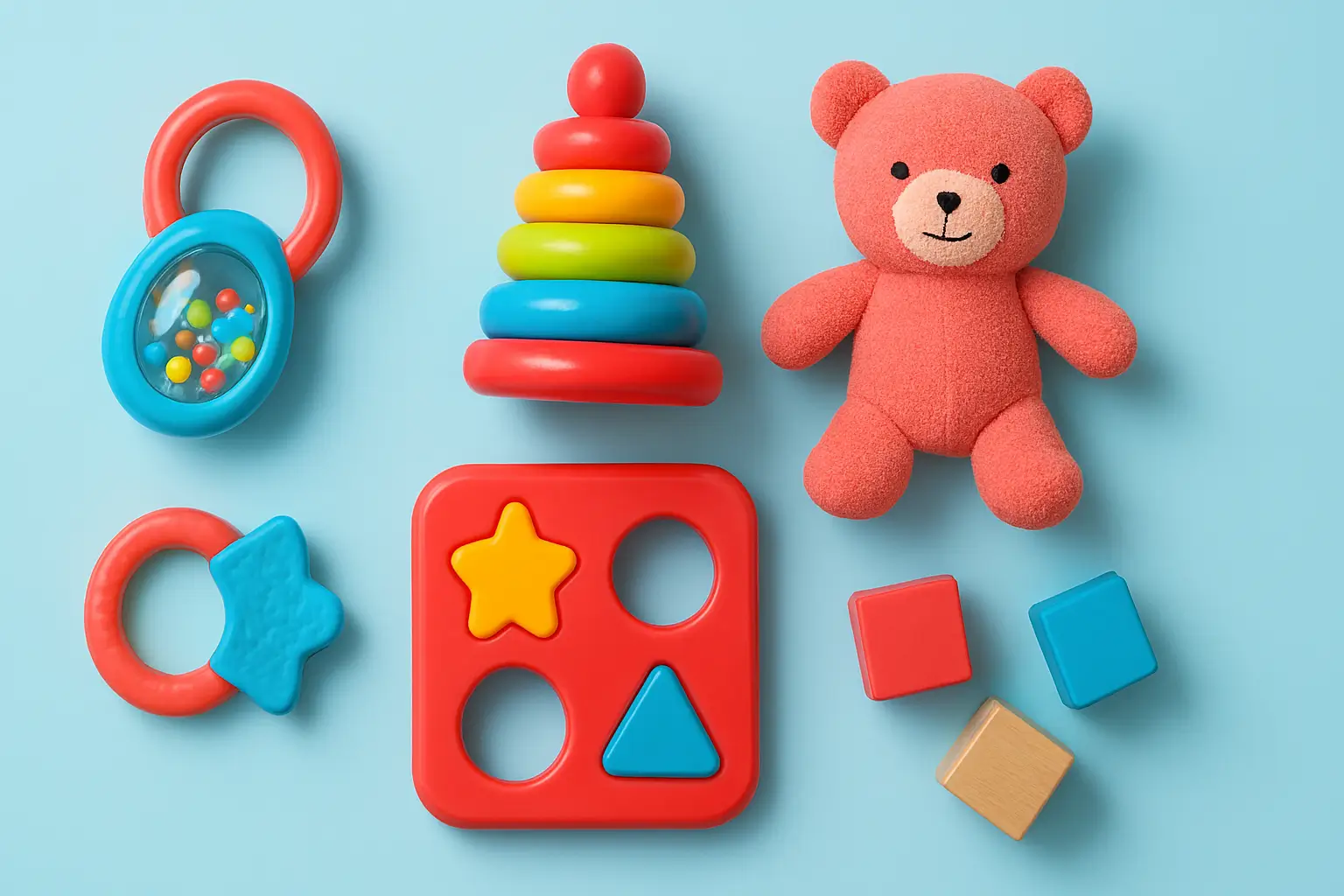
As a parent, one of the most heartwarming milestones is watching your baby grasp their first toy. That tiny moment signals the start of curiosity, sensory learning, and joyful discovery. But the big question many new parents ask is: “When can my baby start playing with toys?”
In this guide, we’ll explore:
- The right age for introducing toys
- Developmental benefits of playtime
- Safety tips every parent should know
- Age-by-age toy recommendations (0–24 months)
- Expert answers to common baby toy questions
Let’s dive into how to make playtime both safe and enriching for your little one.
Table of Contents
Why Toys Are Important for Babies
Toys are not just fun — they’re vital tools for your baby’s brain, motor, and emotional development. Through play, babies learn to:
- Strengthen hand-eye coordination
- Develop fine and gross motor skills
- Explore cause and effect
- Build emotional bonding through shared play
- Stimulate sensory and cognitive growth
🧠 Did you know? Studies show that babies who engage in age-appropriate play early on demonstrate faster cognitive development and stronger communication skills.
When Can Babies Start Playing with Toys?
Babies can begin interacting with simple toys as early as a few weeks old, though their ability to play evolves with age. Here’s a breakdown by stage:
🍼 Newborn to 2 Months: Sensory Exploration Begins
Developmental focus: Visual stimulation & listening skills
At this stage, babies can’t grasp toys yet — but they love seeing and hearing them.
Choose toys that stimulate their senses gently.
Best Toys for Newborns:
- High-contrast black-and-white mobiles
- Soft rattles (for you to shake)
- Musical cribs or lullaby projectors
- Mirror toys for tummy time
✅ Quick Info: Newborns can’t play independently yet, but sensory toys help build early awareness and bonding.
👶 3 to 6 Months: The Discovery Phase
Developmental focus: Grasping, mouthing, and curiosity
Now your baby starts reaching for, holding, and exploring objects. Everything goes into their mouth — it’s how they learn!
Best Toys for 3–6 Months:
- Soft plush rattles
- Teething rings
- Crinkle cloths and textured toys
- Soft stacking blocks
- Play gyms with hanging toys
Parent Tip: Always ensure toys are non-toxic, BPA-free, and have no detachable small parts.
🤱 6 to 9 Months: The Movement Stage
Developmental focus: Sitting, rolling, crawling
Your baby is now ready for interactive and movement-based toys. They begin understanding cause and effect, so toys that respond with sound or motion are perfect.
Best Toys for 6–9 Months:
- Rolling balls and toy cars
- Pop-up activity centers
- Musical toys and drums
- Shape sorters with large pieces
🚼 9 to 12 Months: The Problem-Solving Phase
Developmental focus: Fine motor control and curiosity
Your baby starts understanding actions and outcomes. They love to stack, drop, bang, and explore.
Best Toys for 9–12 Months:
- Stacking cups and rings
- Soft building blocks
- Push-and-pull toys
- Activity cubes
Safety Reminder: Check all toys regularly for wear and tear — babies love to bite, chew, and drop!
👣 12 to 24 Months: Imaginative and Active Play
Developmental focus: Walking, talking, and imagination
Toddlers are active explorers! They love to mimic adults, build towers, and pretend play.
Best Toys for 1–2 Year Olds:
- Ride-on toys and walkers
- Pretend play sets (kitchen, doctor, etc.)
- Sorting and stacking toys
- Soft dolls and stuffed animals
- Musical instruments
Toy Safety Guidelines for Parents
Safety should always come first. Here’s a quick checklist before buying any baby toy:
✅ Check for choking hazards (small parts)
✅ Choose BPA-free, non-toxic materials
✅ Avoid toys with sharp edges or strings
✅ Make sure all toys meet ASTM or CPSC safety standards
✅ Wash soft toys frequently to prevent bacteria buildup
How to Introduce Toys to Your Baby
- Start Slow: Introduce one toy at a time so your baby doesn’t feel overstimulated.
- Join the Play: Babies learn best through interactive play with parents.
- Observe Reactions: Notice what textures or colors your baby enjoys most.
- Rotate Toys: Swap out toys every week to keep playtime fresh.
- Encourage Exploration: Let your baby explore freely under supervision.
Signs Your Baby Is Ready for Toys
Watch for these key milestones:
- Reaching or grasping objects
- Following toys with their eyes
- Smiling or babbling at play sounds
- Showing interest in colors and textures
These cues mean your baby is eager to engage and learn!
FAQs: When Can Babies Start Playing with Toys?
❓ Can newborns play with toys?
Not directly, but they benefit from sensory toys like mobiles, rattles, and black-and-white cards.
❓ When do babies start holding toys?
Most babies begin grasping toys around 3 months old.
❓ What toys are safe for 6-month-old babies?
Soft rattles, teethers, and textured sensory toys are ideal for 6-month-olds.
❓ How long should babies play with toys daily?
Short sessions — 10–15 minutes at a time, several times a day — are perfect in the first year.
❓ What toys help with brain development?
Toys that encourage exploration, cause-and-effect learning, and sensory feedback — like activity cubes, stacking rings, and musical toys.
Expert Recommendation
👩⚕️ Dr. Karen Lewis, Pediatric Development Specialist, says:
“Playtime from birth is critical. Even simple toys can stimulate early cognitive and motor development. The key is age-appropriate interaction and safety.”
Read More
- Best Educational Toys for BabiesDiscover the best educational toys for babies that boost learning, creativity, and development through fun, sensory-rich, and age-appropriate play experiences.
- Best Bath Toys for ToddlersDiscover the best bath toys for toddlers that make bath time fun, safe, and educational while encouraging creativity, motor skills, and sensory learning.
- How to Choose the Best Baby Rattles for Your BabyDiscover how to choose the best baby rattles that are safe, engaging, and perfect for your baby’s developmental milestones.
- Best Pop Up Toys for Babies: A Fun Way to Boost Early LearningExplore the best pop up toys for babies that make learning fun while boosting motor skills and curiosity.
- Stacking and Sorting Toys for Kids with AutismExplore the best sorting toys for kids with autism that make learning fun, sensory-friendly, and skill-building through joyful play.