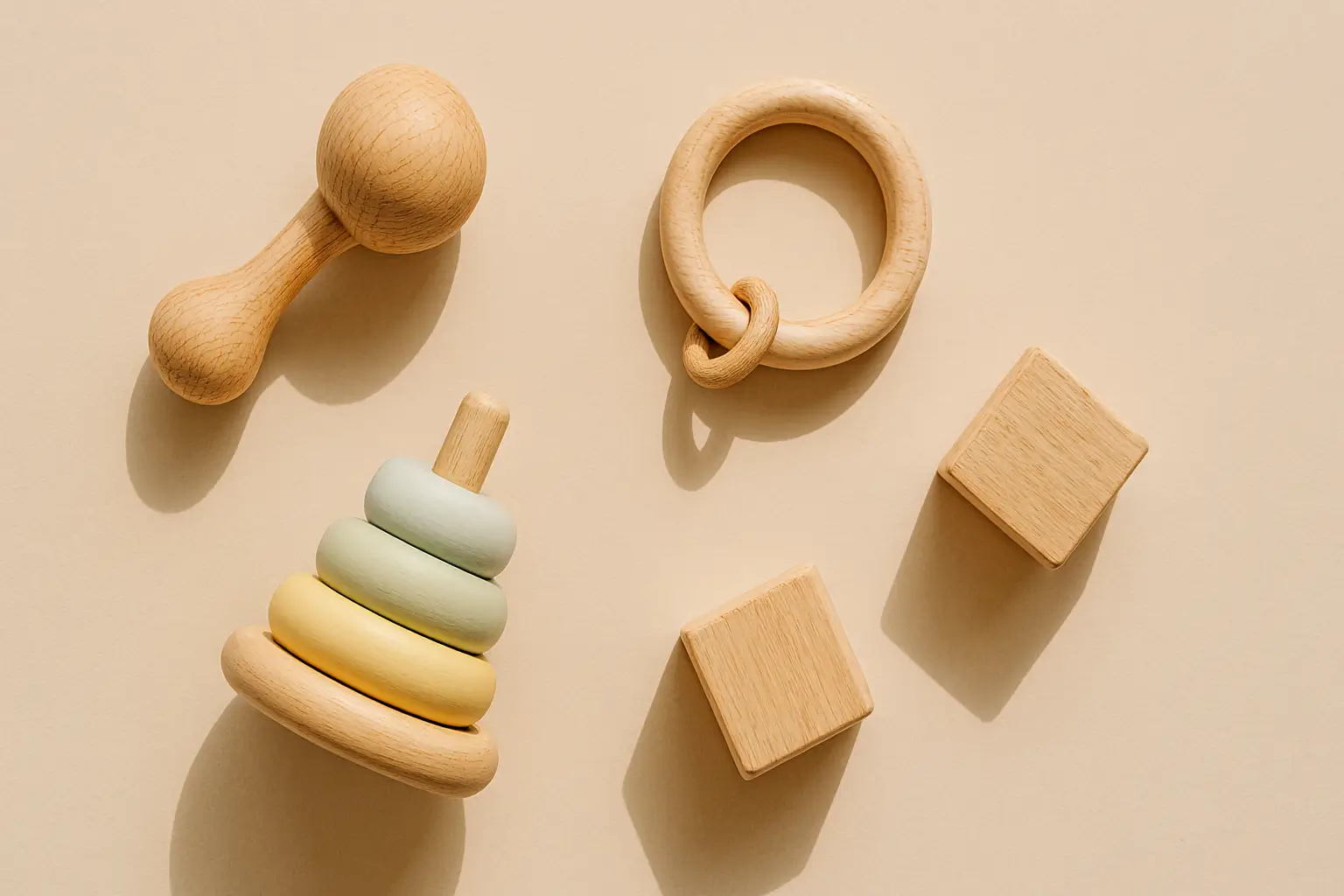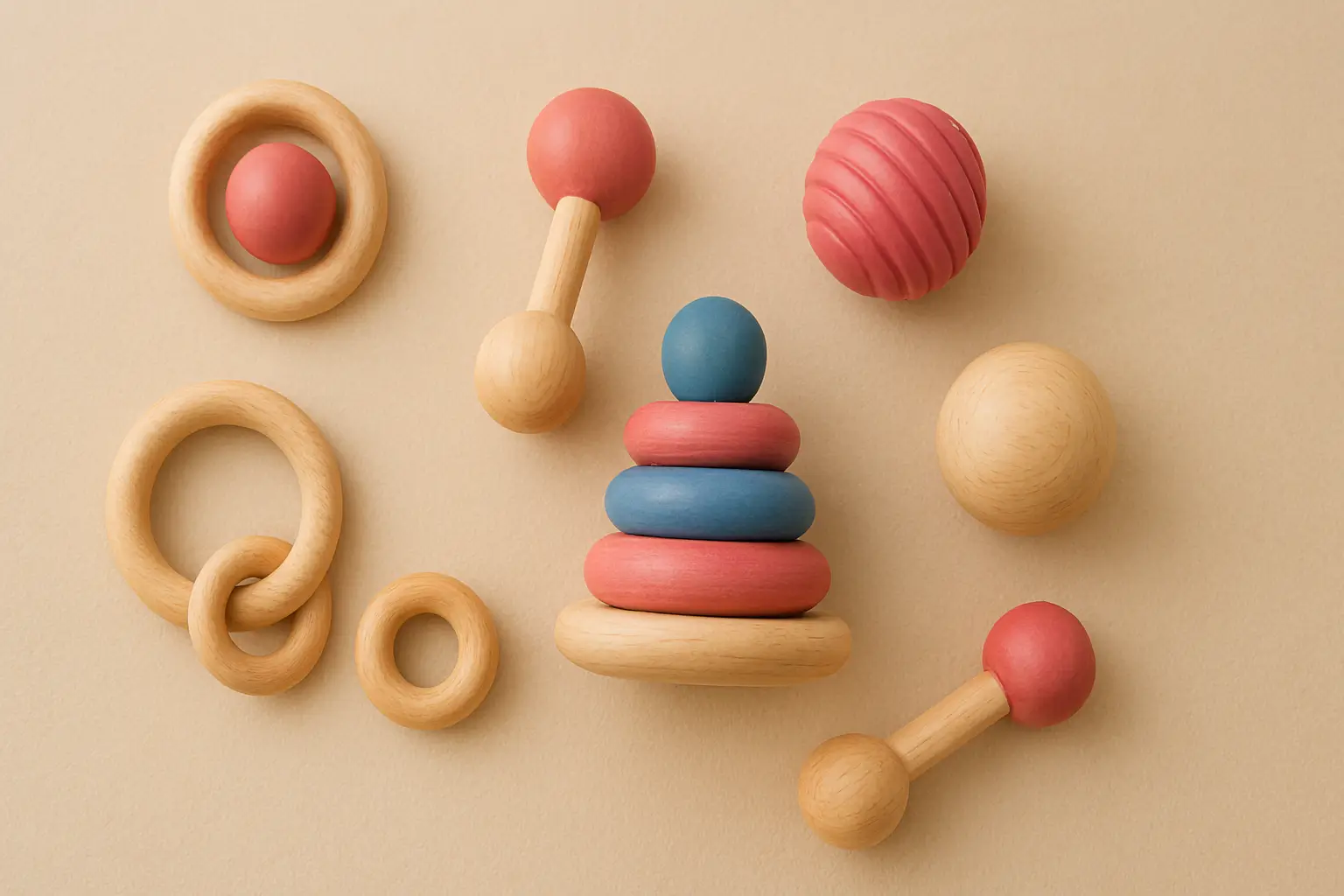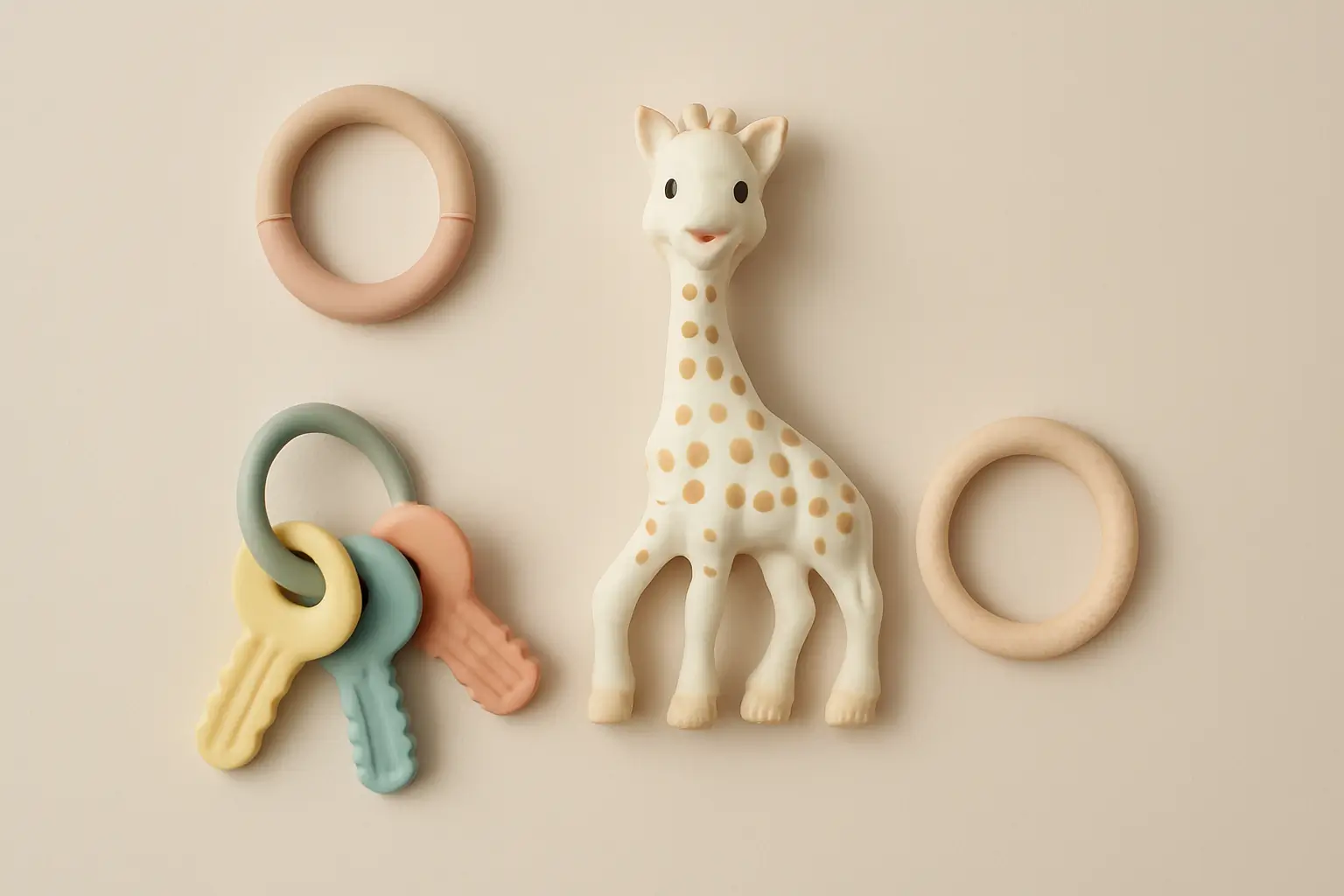
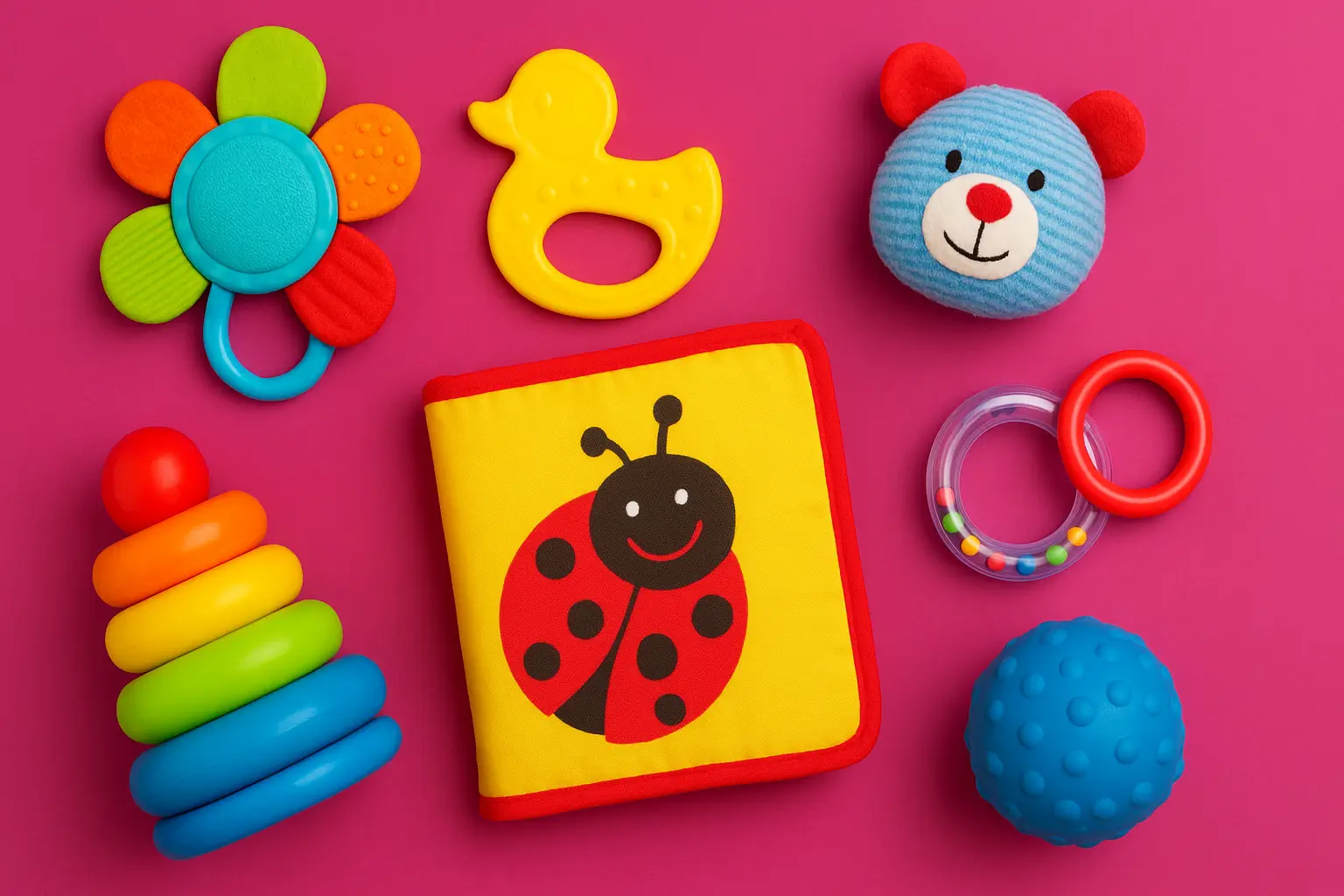
A complete guide for parents to choose safe, fun, and development-boosting toys.
Table of Contents
👶 Why Choosing the Right Toys Matters at 6 Months
At six months, your baby is entering a magical stage of growth — learning to sit, grab, roll, and explore the world through sight, sound, and touch. The right toys do more than entertain; they support sensory, motor, emotional, and cognitive development.
Experts agree that stimulating toys at this stage help build early skills such as:
- Grasping and coordination – holding and shaking toys strengthens hand-eye control.
- Cognitive awareness – cause-and-effect play helps babies learn their actions create results.
- Sensory development – varied textures, colours, and sounds enhance perception and curiosity.
- Muscle growth – rolling, reaching, and sitting toys encourage gross-motor activity.
Selecting toys that match your baby’s developmental level ensures every play moment is meaningful, safe, and growth-focused.
🧸What Toys Are Good for a 6-Month-Old Baby?
Let’s dive deeper and explore the best toys for a 6-month-old baby.
🪀 1. Sensory & Tactile Toys
Why They’re Great
Six-month-olds are in a stage of sensory discovery — they love toys they can touch, chew, see, and hear. Sensory toys help develop touch sensitivity, visual tracking, and early curiosity.
What to Look For
- Bright, contrasting colours
- Mixed textures: soft, rubbery, smooth, or crinkly
- Safe teething surfaces
- Gentle rattling or squeaky sounds
Examples
- Crinkle fabric books
- Textured balls
- Soft plush rattles
- Teething rings
- Sensory play mats
🧩 Pro Tip: Choose toys that combine multiple senses — for example, a soft rattle with both texture and sound for richer playtime learning.
🤲 2. Grasping & Fine-Motor-Skill Toys
Why They’re Great
Around this age, babies can intentionally reach for objects. Toys that encourage holding, transferring, and stacking improve dexterity and hand strength.
What to Look For
- Lightweight and easy to grip
- Rounded edges and non-toxic finishes
- Stackable or knock-over designs
Examples
- Soft stacking rings
- Nesting cups
- Soft blocks
- Wide-handle rattles
🧠 Learning Benefit: Enhances coordination and introduces early problem-solving when babies learn how things fit together.
🧩 3. Cause-and-Effect & Interactive Toys
Why They’re Great
Babies love discovering that shaking, pressing, or dropping something creates a sound or movement. This concept of cause and effect is vital for early cognitive growth.
What to Look For
- Buttons or levers that respond with sound or light
- Simple interactive motion (rolling balls, pop-ups)
- Gentle music or voice responses
Examples
- Activity cubes
- Pop-up toys
- Musical toys with lights
- Baby-safe keyboards
💡 Parent Tip: Engage with your baby by pressing buttons together and talking about what happens — this builds communication and bonding.
🏃 4. Movement & Gross-Motor Toys
Why They’re Great
At six months, babies are rolling and beginning to sit up. Toys that inspire movement and balance strengthen muscles and coordination.
What to Look For
- Lightweight balls or toys that roll
- Play gyms with hanging toys
- Cushioned tummy-time mats
- Soft push or pull toys (with supervision)
Examples
- Textured rolling balls
- Tummy-time mats with mirrors
- Sit-up activity toys
🎯 Play Idea: Place toys just out of reach during tummy time to motivate reaching, stretching, and crawling.
🧼 Safety & Buying Tips for 6-Month-Old Baby Toys
Safety always comes first. Here’s what to check before purchasing:
✅ Toy Safety Checklist
- Age label: “6 months+” or “Infant Safe”
- Non-toxic, BPA-free materials
- No small detachable parts or strings
- Rounded edges and smooth surfaces
- Easy-to-clean or washable design
- Moderate sound volume
- Always play under supervision
🧺 Cleaning Tip
Wash soft toys weekly in mild detergent and air-dry. Wipe hard toys with baby-safe sanitizing wipes.
💡 Smart Playtime Tips
- Rotate toys weekly to maintain interest.
- Limit quantity — 5-7 toys at once keeps play focused.
- Use daily household items (measuring cups, spoons) under supervision for extra exploration.
- Talk and describe: “This ball is red and soft!” — language exposure starts early.
- Involve siblings or caregivers for social learning.
💸 Budget & Longevity Tips
You don’t need a toy overload! Choose multi-functional toys that grow with your baby.
Some examples:
- Stacking cups — for 6 months (stacking), 9 months (pouring water), 1 year+ (color sorting)
- Soft blocks — for squeezing now, building later
- Activity gyms — for tummy time now, independent sitting later
Focus on quality, not quantity — a small set of durable, developmental toys is better than a pile of overstimulating ones.
📋 Quick Summary: Best Toy Categories for 6-Month-Old Babies
| Toy Type | Development Focus | Example Toys |
|---|---|---|
| Sensory Toys | Vision, touch, hearing | Crinkle book, teether, sensory ball |
| Fine-Motor Toys | Grasping, coordination | Stacking rings, nesting cups |
| Interactive Toys | Cause-and-effect learning | Activity cube, musical toy |
| Movement Toys | Balance, sitting, rolling | Soft ball, tummy-time mat |
🗣️ FAQ — Common Questions About Toys for 6-Month-Old Babies
1. What kind of toys should I avoid for a 6-month-old baby?
Avoid toys with small detachable parts, sharp edges, loud sounds, or toxic paints. Skip anything labelled for 12 months + unless supervised closely.
2. Are teething toys safe at six months?
Yes, most babies start teething around 4–7 months. Choose BPA-free silicone or natural rubber teethers that are easy to hold and can be chilled (not frozen).
3. How many toys does a 6-month-old really need?
About 5–10 toys rotated weekly are plenty. Babies at this age thrive on repetition and discovery, not quantity.
4. What is the best educational toy for a 6-month-old?
Soft stacking rings and activity cubes top the list — they teach colour, shape, coordination, and problem-solving in one package.
5. Can I use electronic toys for my 6-month-old?
You can, but choose simple, low-stimulation options — avoid bright flashing lights or constant music. Natural textures and human interaction still matter most.
6. Are homemade toys safe for 6-month-olds?
Yes, if you use clean, non-toxic materials and ensure there are no small or detachable pieces. Examples: cloth sensory bags or rattles made from sealed bottles of rice (supervised only).
7. What are some gender-neutral toy ideas for a 6-month-old?
Soft blocks, textured balls, musical rattles, stacking cups, and tummy-time mats — all encourage learning regardless of gender.
8. How can I tell if my baby likes a toy?
Watch for smiles, vocalisations, longer focus time, and attempts to reach for or repeat the play action. If baby turns away or fusses, switch toys or pause play.
9. Are brand-name toys like Fisher-Price or Lamaze worth it?
They often offer tested safety and developmental design, but budget options can be equally effective if they meet safety and sensory standards.
10. How long will these toys last?
Most 6-month-old toys are useful up to 12 months. As your baby starts crawling and pulling up, transition to push-pull toys, shape sorters, and ride-ons.
🧠 Key Takeaway
The best toys for a 6-month-old baby are safe, colourful, textured, and interactive. Focus on options that encourage sensory play, fine-motor practice, cause-and-effect exploration, and movement. Always prioritise safety, simplicity, and parent-baby interaction over flashy features.
🎀 Remember: The best toy your baby has is you — your voice, your touch, and your engagement make every playtime more meaningful.
Read More:
- Best Educational Toys for BabiesDiscover the best educational toys for babies that boost learning, creativity, and development through fun, sensory-rich, and age-appropriate play experiences.
- Best Bath Toys for ToddlersDiscover the best bath toys for toddlers that make bath time fun, safe, and educational while encouraging creativity, motor skills, and sensory learning.
- How to Choose the Best Baby Rattles for Your BabyDiscover how to choose the best baby rattles that are safe, engaging, and perfect for your baby’s developmental milestones.
- Best Pop Up Toys for Babies: A Fun Way to Boost Early LearningExplore the best pop up toys for babies that make learning fun while boosting motor skills and curiosity.
- Stacking and Sorting Toys for Kids with AutismExplore the best sorting toys for kids with autism that make learning fun, sensory-friendly, and skill-building through joyful play.